Vitamin C is a raw material for collagen, the protein in tendons and ligaments. Zinc supports growth and wound healing. For a young climber who is sore, the useful move is to eat enough of both from food, and to let a doctor handle the injury itself.
The nutrition and recovery guide covers meals, snacks, and the rest of the week. This page stays on the two micronutrients parents look up after a finger or elbow starts complaining.
Key takeaways
- The body needs vitamin C to make collagen, which helps wounds heal. NIH daily targets for kids run from 15 mg at ages 1 to 3 up to 75 mg for teen boys and 65 mg for teen girls.
- Zinc is required for growth in childhood and adolescence, and it helps wounds heal. Daily targets run from 3 mg at ages 1 to 3 to 11 mg for teen boys and 9 mg for teen girls.
- Peppers, citrus, kiwi, broccoli, strawberries, and tomatoes cover vitamin C. Meat, fish, poultry, fortified cereal, beans, nuts, dairy, and eggs cover zinc.
- Most kids in the United States already get enough of both from food. A very narrow diet is the situation where that stops being true.
- Supplements have upper limits, and high doses can upset the stomach. Food first, and a clinician if you are worried about a deficiency or an injury.
What do vitamin C and zinc actually do for tendons?
The NIH Office of Dietary Supplements says the body needs vitamin C to make collagen, a protein required to help wounds heal. It is also an antioxidant and it helps the body absorb iron from plant foods. Dietitian Kaila Dickey, on Nutrition for Climbers, uses the gym version: vitamin C is required for collagen, and collagen is a building block for tendons and ligaments.
Zinc is not a tendon pill with a special dose. The NIH fact sheet says that during childhood and adolescence the body needs zinc to grow and develop properly, and that zinc helps wounds heal. Dickey calls it an important mineral in healing and says it is better obtained from food, including animal foods, whole grains, and legumes.
Very low intakes are a medical problem, not a guess from one sore week. The NIH notes that little or no vitamin C, below about 10 mg a day for many weeks, can lead to scurvy, with poor wound healing and joint pain. Zinc deficiency in infants and children causes diarrhea, slow growth, and loss of appetite. Stalled growth, a crashed appetite, or a wound that will not heal belongs with your child's doctor.
How much does a growing climber need?
The NIH lists average daily recommended amounts. These are targets for healthy kids, not treatment doses.
Vitamin C:
- Ages 1 to 3: 15 mg
- Ages 4 to 8: 25 mg
- Ages 9 to 13: 45 mg
- Teens 14 to 18: 75 mg for boys, 65 mg for girls
Zinc:
- Ages 1 to 3: 3 mg
- Ages 4 to 8: 5 mg
- Ages 9 to 13: 8 mg
- Teens 14 to 18: 11 mg for boys, 9 mg for girls
Dickey's practical target for climbers is to aim for 100 percent of the daily value for vitamin C and zinc, along with calcium and vitamin D, from the overall diet. She also writes that not eating enough for the training you are doing can leave the body more open to injury. Calories still come first. A perfect orange does not fix a week of skipped meals. The sleep and recovery post is the other half of that recovery picture.
Which foods cover it without a supplement bottle?
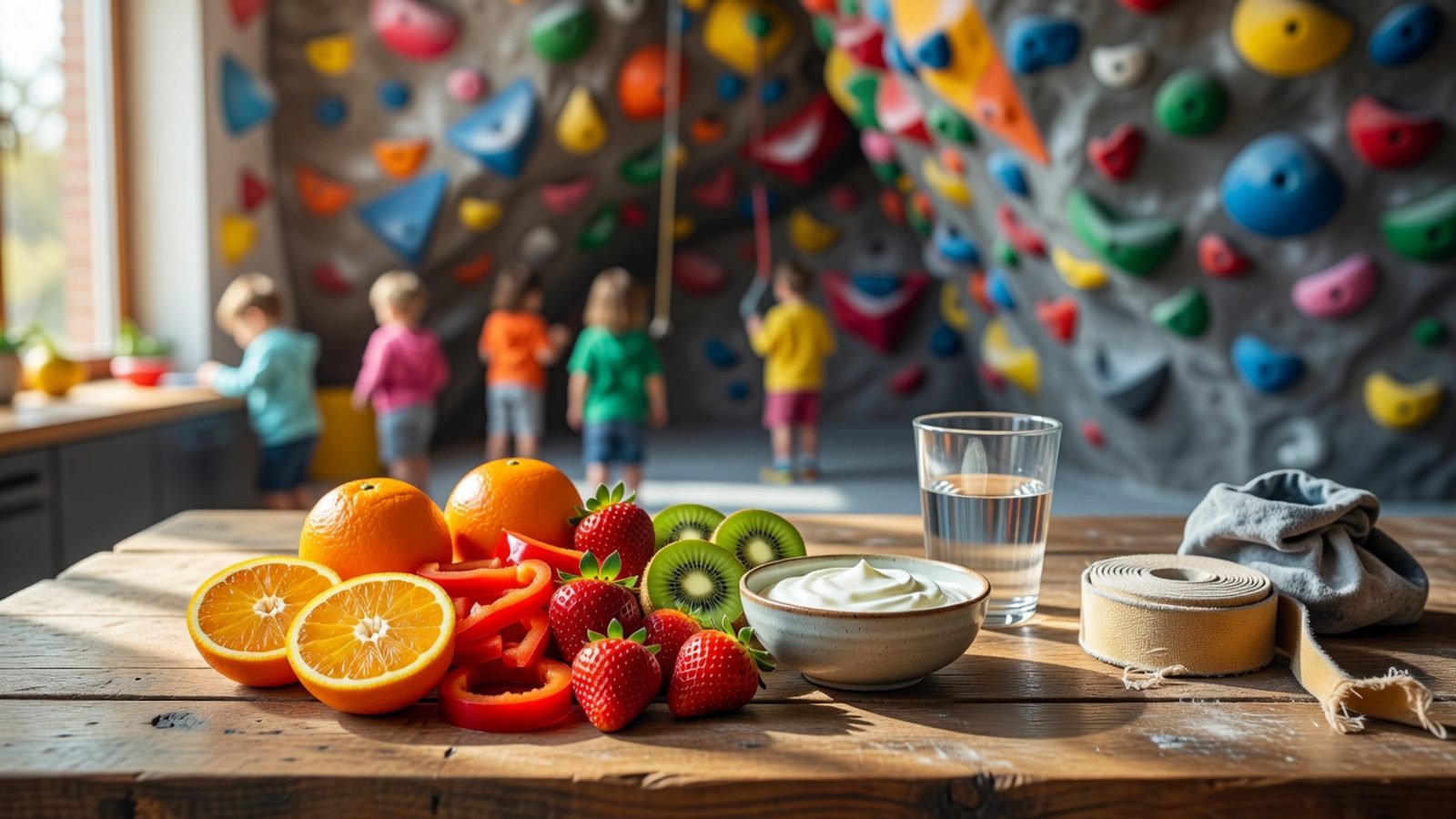
Vitamin C shows up in citrus and juice, red and green peppers, and kiwifruit, plus broccoli, strawberries, cantaloupe, baked potatoes, and tomatoes. Many of the best sources are eaten raw. Long storage and hard cooking lower the amount. Steaming or microwaving loses less. Fruit and vegetables across the day cover 25 or 45 mg without a powder.
Zinc is richest in oysters. Meat, fish, poultry, crab, lobster, and fortified breakfast cereals are also good sources. Beans, nuts, whole grains, eggs, and dairy provide some. The NIH says vegetarian and vegan eaters may absorb less, because meat is a strong source and phytates in beans and grains block some of the zinc. Ask a pediatrician or dietitian before a supplement. A high-dose pill is not a tendon hack.
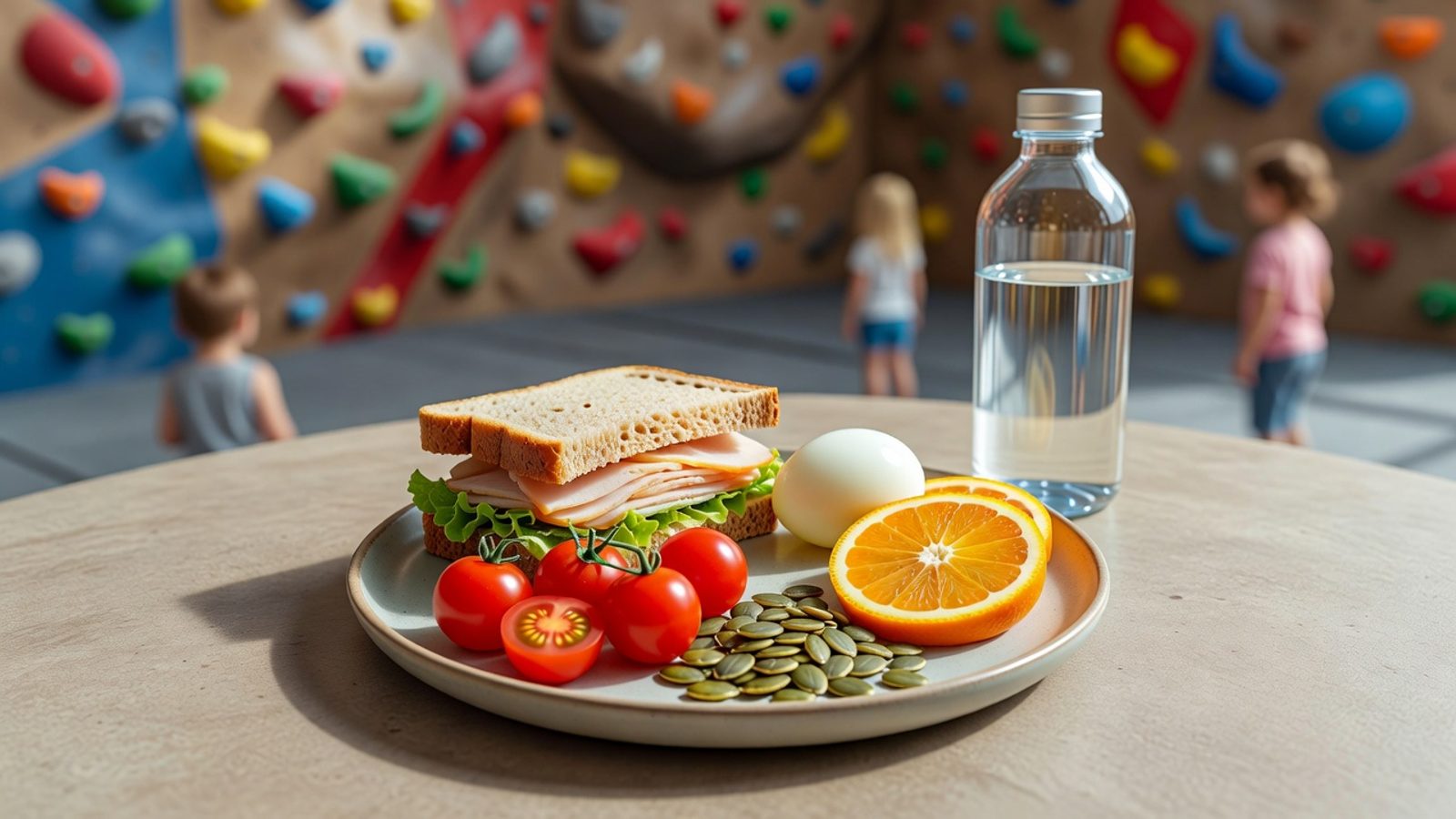
Gym-bag ideas: orange slices with a turkey sandwich, pepper strips with cheese, yogurt with kiwi, beans and rice with tomatoes. Dickey also says to eat within an hour or two after training and to include protein for muscle and bone repair. Soy is one plant food she flags for having all the essential amino acids. None of that requires a tendon product.
Should you add collagen or extra vitamin C?
Dickey writes that some climbers use about 20 grams of collagen before climbing, with about 50 mg of vitamin C, because tendons and ligaments have less blood flow and she wants those nutrients on board before the session. That is an adult-leaning practice choice from a climbing nutrition site. It is not a required step for a child, and it is not a treatment for a sore finger.
The NIH is plain that most people in the United States already get enough of both from food. Extra is not free. Too much vitamin C can cause diarrhea, nausea, and stomach cramps. The daily upper limit, counting food and supplements, is 400 mg at ages 1 to 3, 650 mg at ages 4 to 8, and 1,200 mg at ages 9 to 13. Too much zinc can cause nausea, dizziness, headaches, an upset stomach, vomiting, and loss of appetite. Over a long time it can lower immunity, HDL cholesterol, and copper. The zinc upper limit is 7 mg at ages 1 to 3, 12 mg at ages 4 to 8, 23 mg at ages 9 to 13, and 34 mg for teens 14 to 18. A supplement can pass those ceilings. Dinner rarely does.
If a clinician has already recommended a supplement for a diagnosed gap, follow that dose. If they have not, feed the foods above and spend your worry on the training load. The overuse injuries guide and the safety guide are the pages for what to change in the week while a finger or elbow calms down. A physical therapist who knows young climbers can guide loading. A vitamin cannot replace that.
When the same finger or elbow keeps hurting, read Overuse Injuries in Young Climbers: A Parent's Guide.
What about the rest of the plate while something heals?
Keep meals familiar. Dickey also flags calcium and vitamin D, plus fish, nuts, grains, beans, fruit, and vegetables, and she warns that under-eating leaves athletes more open to injury. If appetite drops, tell the doctor. The NIH notes zinc deficiency can show up as slow growth and low appetite. Food supports healing. It does not tell you whether a sore finger is a growth plate, a pulley, or a tendon. Book the visit and ease climbing until someone examines your child.
FAQ
Will extra vitamin C heal a pulley or tendon faster?
Vitamin C is required to make collagen, which helps wounds heal. Hitting the daily food target supports that work. The NIH does not describe high-dose vitamin C as a tendon treatment, and large doses can upset the stomach. A doctor or physical therapist should guide the injury.
What if my child will not eat oysters or red meat?
They do not need oysters. Fortified cereal, dairy, eggs, beans, nuts, and whole grains provide zinc. Meat, fish, and poultry make it easier. If your child eats little or no animal food, ask a pediatrician or dietitian before a zinc supplement, because phytates in beans and grains reduce absorption.
Can I copy an adult collagen powder dose?
Some adult climbers take collagen with vitamin C before training. Dickey describes about 20 grams of collagen with about 50 mg of vitamin C. That is not a child dose to copy off a label. Food sources of vitamin C and protein are the default unless your child's clinician recommends something else.
Are gummies a good way to hit the vitamin C number?
Most multivitamins contain vitamin C, and many contain zinc. Food is still the NIH's preferred path, and gummy doses plus food can crowd the upper limit in small children. Check the label with your pediatrician before a daily gummy becomes the plan.
Does this replace seeing a doctor for finger pain?
No. These nutrients are part of everyday eating. Joint pain, swelling, or a tendon that keeps hurting needs a pediatrician, a sports-medicine clinician, or a physical therapist. Tell them what your child has been eating only as part of the history.
A free note when you want the next recovery topic
The Belay is the free parent newsletter. It is the only signup on this site. No meal plan to buy, no app.
Sources
- NIH Office of Dietary Supplements, "Vitamin C: Fact Sheet for Consumers." https://ods.od.nih.gov/factsheets/VitaminC-Consumer/
- NIH Office of Dietary Supplements, "Zinc: Fact Sheet for Consumers." https://ods.od.nih.gov/factsheets/Zinc-Consumer/
- Dickey, "Nutrition for Injury Prevention in Climbers," Nutrition for Climbers, June 3, 2020. https://www.nutritionforclimbers.com/nutrition-for-injury-prevention-in-climbers/