
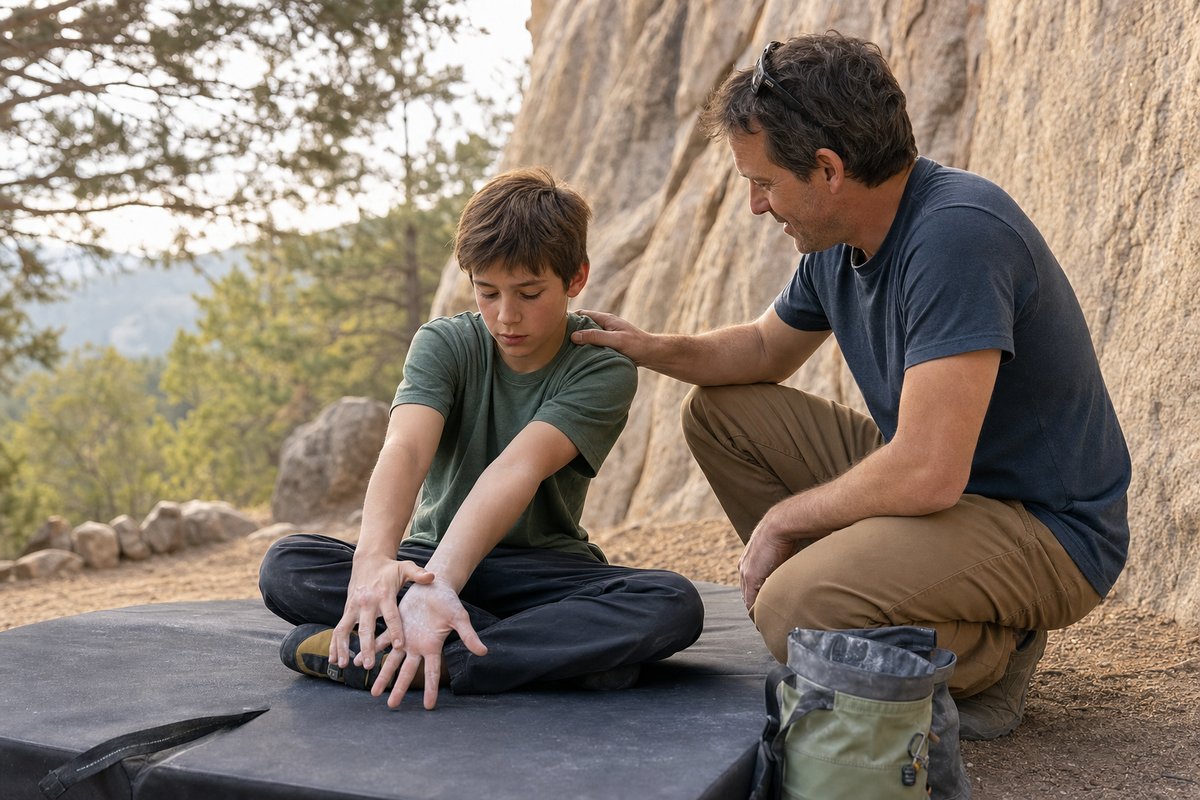
During puberty, the climber you knew last season can feel like a different athlete on the same wall. Strength, balance, mood, and interest in the gym often move on separate clocks.
You can help without turning the gym into a clinic. Keep the sessions they still enjoy, skip comments about size, and get a doctor involved when pain is the story.
Key takeaways
- A growth spurt can make a capable climber feel weak, clumsy, or suddenly heavy on the wall.
- Motivation often dips when school, friends, and a changing body compete with practice.
- Comments about weight, food, or climbing lighter hit harder in these years. Skip them.
- Keep most sessions short on ego and long on movement they still like.
- Pain that lingers, swells, or shows up at rest is a reason to stop and see a clinician.
Why do grades stall when a child is growing?
Grades stall because the body changed faster than the movement patterns did. A climber who sent a grade easily in the spring can miss the same holds in the fall after a few inches of height and a shift in weight.
Arms and legs often lengthen before coordination catches up. Holds that used to sit at chest height now sit nearer the hip. Foot sequences that felt automatic need a new reach. None of that means they stopped trying.
Treat a stalled grade as a timing note. Ask what felt different on the wall. Then let the answer stand without a lecture in the car. "Want to try it slow, or leave it for today?" offers a choice.
What happens to strength and coordination?
Relative strength often dips while height and weight jump. The muscle is still there. It is moving a longer frame, and sometimes a heavier one, and the timing is off.
You may see missed feet, big swings, and a kid who says their fingers do not work on holds they used last month. Fatigue shows up earlier. Shoes that fit in August can hurt by October because feet grow in bursts too.
This is a poor season for a secret hangboard at home. General strength can still fit if a coach matches it to age and to how fast they are growing. Read strength training by age for young climbers before that conversation. Do not copy an adult hang program because a teammate is doing hangs.
How does motivation change?
Motivation gets noisy. Some kids want the gym more, because it is one place that still feels like theirs. Others would rather be with friends, and climbing starts to feel like another adult schedule on the calendar.
Both reactions are common. A flat month is different from a decision to quit. "Tuesday practice, or a week of open gym with a friend?" tells you more than "You have to stay on the team."
If they are pulling away, ask what part of climbing still sounds good, then stop talking. Friends leaving the sport can look like a motivation problem. Ask who they want to climb with before you ask which grade they want next. If school is heavy, cut a gym day before you cut sleep.
How should you talk about a changing body?
Talk about what the body can do this week, not about how it looks. Puberty already supplies a running commentary. Your child does not need a second one from the person who drives them to the gym.
Skip suggestions to eat less so they feel lighter on small holds. Skip comparisons to a lighter teammate. Skip jokes about growth, weight, or clothes that stopped fitting. Those lines stay longer than the send they missed.
Girls often hear comments about shape. Boys often get told to push harder when the real issue is timing. Practice and food cover more of this season than a new training toy.
If they bring up food, weight, or a fear of getting bigger, listen first. Then say that growing climbers need enough food to practice and to get taller. If worry about eating is sticking around, or if they are hiding food, skipping meals, or talking about their body in a harsh loop, bring in a doctor or a registered dietitian. That is support you arrange. It is not a plan you invent from the bleachers.
Climbing rooms sometimes treat a smaller body as an advantage. A clear line helps. We climb by practicing, resting, and eating enough to grow.
Some girls want an easier day at a certain point in the month. Follow their lead and keep it private. If they suddenly hate Tuesdays, ask whether the locker room feels fine, not only whether the routes feel fine. A looser shirt or a quieter session time can matter as much as a new warmup.
What should training look like in this season?
Training should protect joy and tissue while the growth spurt runs. Shorter hard efforts, more easy climbing, and rest days that are actually rest will serve most kids better than extra volume piled on because a grade dipped.
Ask the coach what to drop before you ask what to add. Finger-intensive repeats and max-style hangs are the first things to question during a fast growth stretch. A coach who works with youth athletes will usually trade those for feet, hips, and easier mileage.
At home, keep sleep and enough food. If they want strength work, keep it to movements a coach has already approved. Read strength training by age before you buy a campus board. End while they still like the gym. "Two more climbs, then we leave" keeps next week possible.
When should you stop and call a clinician?
Stop when pain is the story. Soreness after a new session can fade in a day or two. Pain in a finger, wrist, elbow, knee, or heel that lingers, swells, or hurts at rest needs a clinician who sees young athletes. Take the child off the wall and let the doctor decide what is going on. Tape is not a plan.
Tell the coach what the clinician said, including any limit on climbing or hanging. Kids will downplay pain if they think a team spot depends on showing up hurt. A calm exit teaches the opposite. Note which move hurt and whether it also hurts at school. That note is more useful than a theory from the drive over.
FAQ
Is it normal to climb worse during a growth spurt?
Yes. Many young climbers miss grades and feel uncoordinated for months while height and weight change. The skill is usually still there.
Should we lighten their food so they stay light on the wall?
No. Growing climbers need enough food for practice and for growth. If eating or body comments worry you, talk with a doctor or a registered dietitian.
Can they lift or do pull-ups during puberty?
Often yes, in a simple form a youth coach would recognize. Start with the strength training by age guide and ask the coach before you add finger hangs at home.
My child wants to quit. Do I make them finish the season?
Ask what they want to leave and what they would miss. One bad month is usually too fast for a full quit. A forced season after weeks of a clear no usually backfires. Offer open gym with a friend before you offer none.
Will the old grades come back?
Often they do, once coordination catches the new body and they keep climbing. Sometimes the old grade belonged to proportions they no longer have. The next grade still depends on sessions they want to attend.
How do I tell growth awkwardness from an injury?
Awkwardness is missed moves without a sharp or lasting pain. Injury is pain, swelling, or a joint that hurts at rest. When you are unsure, let a clinician sort it out.
Where can you get the next parent note?
The Belay is the free YouthClimbing.com newsletter for parents. Notes cover gym visits, kids' gear, safety, and the youth season, and they go out as new guides are published. Join The Belay. You can unsubscribe any time.