

Climbing treats a lighter body as an advantage, so pressure about weight can show up even when nobody says the word diet. Watch for smaller meals, harsher body comments, and climbing that starts to depend on eating less, and call your child's pediatrician if that pattern sticks.
Key takeaways
- Performance talk in climbing keeps returning to strength compared with body weight.
- Relative energy deficiency in sport (RED-S) means not enough food for training and for growth. It can affect any athlete.
- Habits and comments are what you can see. A checklist is not a diagnosis.
- Talk about fuel for practice and growth. Skip advice to eat less so a hold feels easier.
- A nutrition class can teach facts. It does not replace a pediatric visit.
Why does weight come up in a climbing gym?
It comes up because performance talk treats a high strength-to-weight ratio as an advantage. A 2026 pilot in Frontiers in Nutrition, by Quesada, Pablos, and Drehmer, says the climbing literature treats low body fat as a way to raise relative strength. The authors say eating-disorder and RED-S concerns have followed youth climbing. They name perfectionism, internalized weight standards, and pressure from coaches or peers.
You will hear it in small lines. A teammate jokes about skipping lunch. A parent blames a growth spurt for a bad season. A coach praises how light someone looks on a small hold. None of those lines is a diagnosis. Together they teach a child that a smaller body is the point.
The National Eating Disorders Association (NEDA) lists a higher competitive level, and pressure to change weight or body composition, among risk factors for athletes in general. NEDA does not single out climbing. A recreational season is a different room from a ranking season. The recreational versus competitive team page is that choice.
What is RED-S?
RED-S means an athlete is not eating enough for the sport and for a growing body. The American Academy of Pediatrics (AAP) says it can affect any athlete, of any gender, age, or level. Low energy can happen when meals get skipped, or when an athlete tries to control weight or shape.
An editorial by the International Olympic Committee's 2023 REDs writing group defines the syndrome as impaired physical or psychological functioning in female and male athletes, caused by problematic low energy availability. Problematic means prolonged, severe, or both. NEDA's REDs page adds that performance can hold, or even look better, for a while. A qualified provider has to decide whether an eating disorder is also present. The screening tool on that page is for clinicians.
USA Climbing's 2023 protocol uses a similar definition. The yearly exam that includes RED-S questions is for National Team and National Development Team members. The protocol calls body mass index an imperfect prompt for a medical review. It is not a number to apply at the kitchen table.
What can a parent notice?
A change in food, rest, or how your child talks about their body. Not a label.
NEDA's warning signs page says a person will not show every sign, and the list is not a checklist. Signs include a strong focus on weight and calories, cutting out food groups, feeling fat after weight has already dropped, skipping meals, denying hunger, hiding the body in layers, and extra exercise to burn off food even when tired, sick, or injured. If you are concerned, get medical help.
The AAP says to talk with a health care provider about a drop in stamina, slower recovery, ongoing fatigue, little improvement despite hard training, mood changes, getting sick often, repeat injuries or stress fractures, poor sleep, weight loss or poor weight gain, irregular or missed periods, or slowed growth. Some uneven timing is common in the first year or two after periods start. A gap longer than three months should be checked.
USA Climbing's protocol separates disordered eating from an eating disorder. In that document, disordered eating includes restrictive dieting, fasting, skipped meals, rigid food rules, and compulsive exercise. An eating disorder is a serious illness a clinician diagnoses. Write down what changed. Leave the name of the illness to the clinician.
How do you talk about fuel instead of restriction?
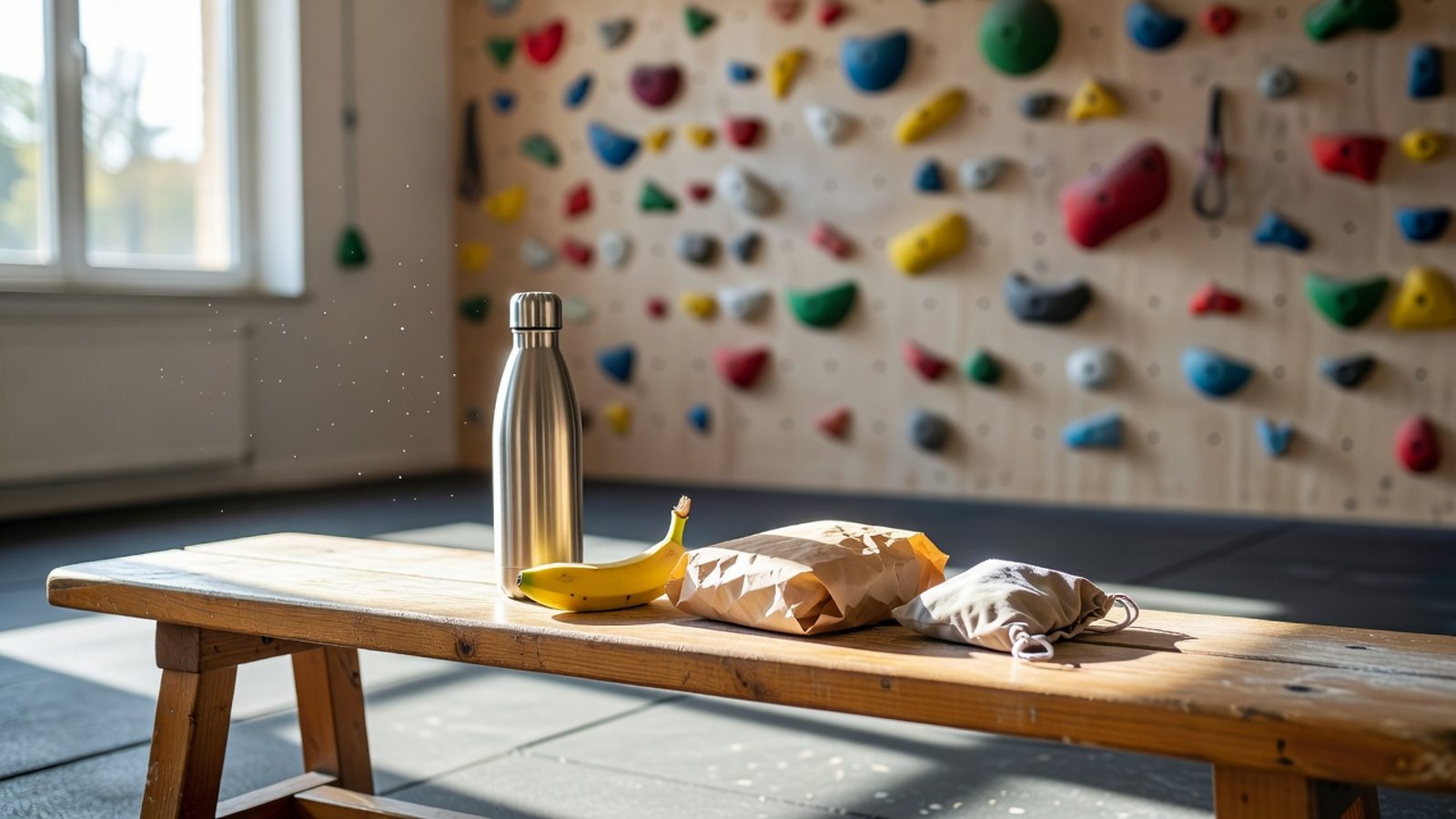
Talk about what the body needs this week. The AAP's prevention list is regular meals and snacks, enough food for training and for growth, food treated as fuel, and no diet lectures.
NEDA says coaches, staff, and parents should stop giving weight or body-composition targets and send that work to qualified professionals. A NEDA coach sheet says only a qualified expert can diagnose an eating disorder. It tells coaches to drop comments about weight, size, and dieting.
Use lines like "You need enough food to climb today and to grow this year." Drop comparisons with a lighter teammate, jokes about a growth spurt, and praise for a smaller portion. Climbing through puberty is already a season of body change. The nutrition guide covers ordinary meals. Competition day fueling covers the cooler. Neither page is a weight-loss plan.
The Frontiers pilot followed 23 competitive climbers in the under-14 and under-16 categories. Eleven took an eight-week class, seven sessions of two hours. Their nutrition knowledge scores rose more than the 12 who did not take the class. Eating-disorder screening scores did not show a statistically clear change. A class can teach. It does not replace a pediatric visit.
When do you call the pediatrician?
Call when the worry sticks. The AAP says if something does not feel right, talk with your child's health care provider. That includes a child who is unhappy with their weight, who feels pressure from the sport to change weight, who follows strict food rules, who feels guilty about eating, who trains extra to lose weight, or who keeps getting injured.
Say what you saw and for how many weeks. The AAP says care for RED-S often includes a sports medicine physician, a registered dietitian, a mental health professional, and sometimes an endocrinologist. Treatment they describe restores energy with more food, better meal timing, and sometimes less training.
What should you say to the coach?
Ask the coach to keep weight and body size out of feedback, and to tell you if meals are getting skipped. Talking with your child's climbing coach is the wider script. A coach can say "eat before you climb." A coach should not name a target weight. NEDA's coach sheet says the next step is a specialist, not a diet plan from the gym floor.
Weight talk can show up in speed training too. See Youth Speed Climbing: How Kids Train and Compete.
FAQ
Should we have them eat less so they stay light on the wall?
No. The AAP says young athletes need enough food to train, recover, and grow. If a grade slipped after a growth spurt, the fix is practice and time, not a smaller dinner.
Is one comment about being light a reason to call?
One clumsy sentence is a reason to shut the topic down. A pattern is a reason to call. Skipped meals, extra training to burn off food, or fear of eating are worth a pediatric visit. NEDA says you do not need every warning sign before you ask for help.
Does this only happen to girls?
No. The AAP says RED-S can affect any athlete, of any gender. The IOC editorial and USA Climbing's protocol both describe it in male and female athletes.
What if my child is just a picky eater?
Picky eating is common. The flag is a new set of rules, shrinking portions, or fear of getting bigger. Tell the pediatrician which foods they still eat.
Will a nutrition workshop solve it?
Not by itself. In the Frontiers pilot, knowledge scores rose and screening scores did not show a clear change. Use a class for knowledge. Use a clinician for a health concern.
Want the next parent note?
The Belay is the free YouthClimbing.com newsletter. It covers gym visits, food, safety, and the youth season. You can unsubscribe any time.
Sources
- Quesada, Pablos, and Drehmer, "Impact of a sport-specific nutrition education program on knowledge and eating disorder risk in youth competitive climbers: a pilot study," Frontiers in Nutrition, 2026. https://www.frontiersin.org/journals/nutrition/articles/10.3389/fnut.2026.1767162/full
- Mountjoy and colleagues, "Avoiding the 'REDs Card'. We all have a role in the mitigation of REDs in athletes," British Journal of Sports Medicine, 2023. https://pmc.ncbi.nlm.nih.gov/articles/PMC10753193/
- Gadek and Wolf, "RED-S in Young Athletes: A Parent's Guide," HealthyChildren.org, American Academy of Pediatrics, updated May 4, 2026. https://www.healthychildren.org/English/health-issues/injuries-emergencies/sports-injuries/Pages/Female-Athlete-Triad.aspx
- USA Climbing, "Protocol for Health Screening and Underweight Athletes," 2023. https://usaclimbing.org/wp-content/uploads/2023/03/USA-Climbing-Protocol-for-Health-Screening-and-Underwieight-Athletes-2023_23032345.pdf
- National Eating Disorders Association, "What Are the Warning Signs of Eating Disorders?" https://www.nationaleatingdisorders.org/warning-signs-and-symptoms-of-eating-disorders/
- National Eating Disorders Association, "Relative Energy Deficiency in Sport (REDs)." https://www.nationaleatingdisorders.org/relative-energy-deficiency-in-sport-red-s/
- National Eating Disorders Association, "Eating Disorders and Athletes." https://www.nationaleatingdisorders.org/eating-disorders-and-athletes-2/
- National Eating Disorders Association, "Tips for Coaches: Eating Disorders and Mental Health." https://www.nationaleatingdisorders.org/wp-content/uploads/2026/05/Coaches-1.pdf