
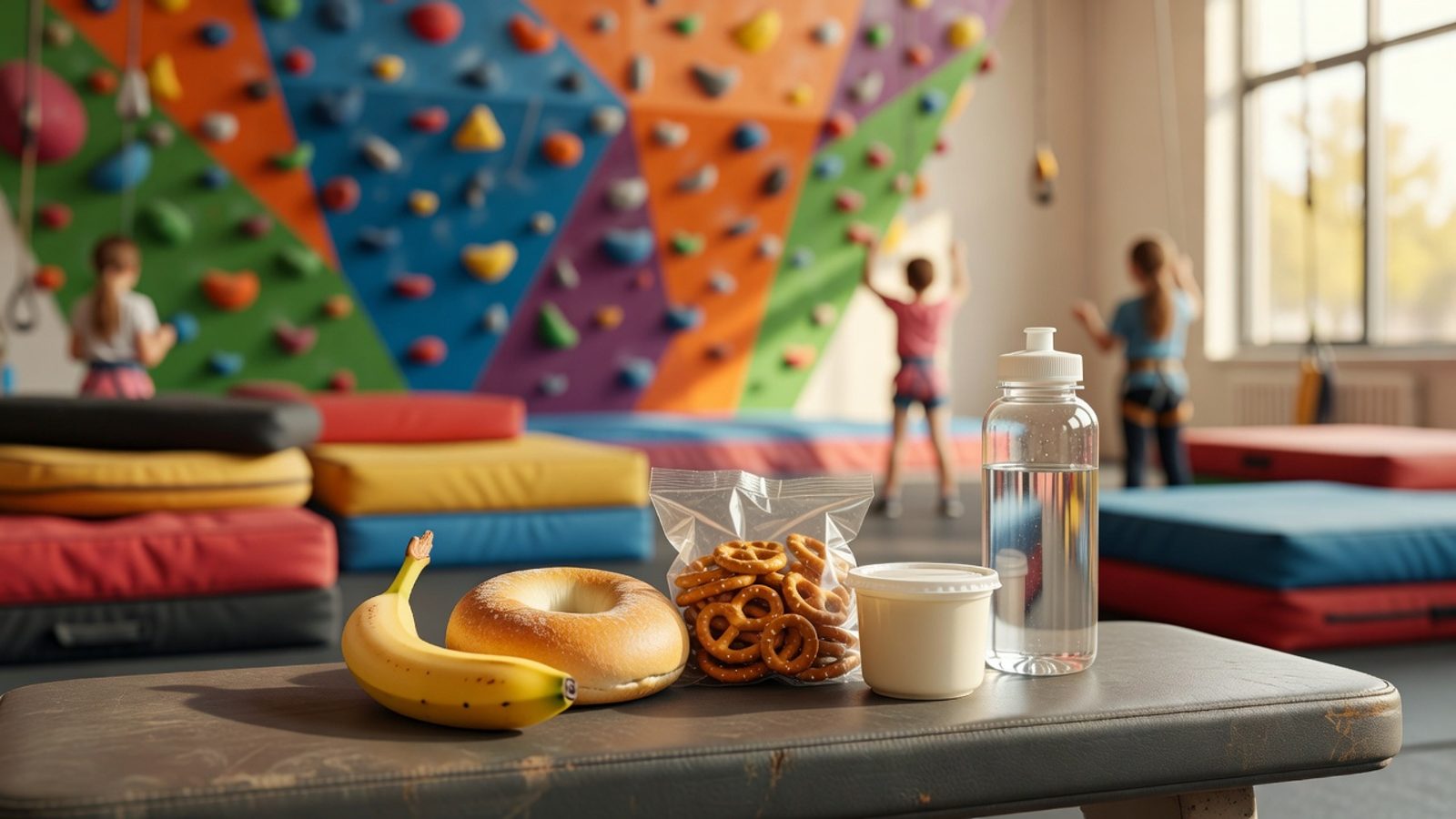
On competition day, feed your child familiar food at planned breaks, with water nearby the whole time. The goal is enough energy for several hours of waiting and climbing, not a new sports-nutrition experiment in the isolation hallway.
Sports nutritionist Brian Rigby writes in Building Healthy and Strong Young Climbers that active kids often need more calories than a vegetable-heavy plate suggests, and that they will not always notice hunger while they are busy. The nutrition and recovery guide puts clock times on pre-climb meals. This post is the gym-floor version, for the morning you are standing next to a crash pad with a nervous 11 year old.
Key takeaways
- Offer food on a schedule. Kids deep in a comp often do not announce that they are hungry.
- A very active 10 year old boy can need on the order of 2,000 to 3,000 calories in a day. Small stomachs need calorie-dense snacks, not only vegetables.
- Water is the right drink for kids before puberty. Sports drinks are a tool for intense teen efforts, not a default for every youth category.
- Carbohydrates carry the day. After puberty, fat becomes a weaker fuel for hard efforts, so teen snacks should lean toward carbs.
- Nothing new on event morning. Test the breakfast at a normal gym day first.
What should the day before look like?
Keep dinner normal and filling. Rigby's calorie example is the one to remember. A very active 10 year old boy, with an hour or more of exercise a day, may need about 2,000 to 3,000 calories depending on size. He compares that with an active adult man around 2,300 to 2,600 calories. A child can have adult-sized energy needs and a much smaller stomach, so a plate of only salad and lean meat can leave them flat. Keep grains, legumes, starchy vegetables, nuts, seeds, and fruit in reach. Vegetables stay. They are just not the fuel.
The night before, serve a carb-heavy dinner your child already likes. Pasta, rice, tortillas, potatoes, or bread, plus a protein they tolerate. If nerves cut the meal short, offer a snack later. Do not use the evening to "eat light so they feel fast." Under-eating is the problem Rigby sees more often than one heavy dinner.
What do you feed them the morning of?
Eat a breakfast you have already used before a hard gym session. Two to four hours before they climb, use a balanced meal: oats, rice, bread, eggs, yogurt, fruit. Thirty to sixty minutes before, shift to a small, easy carb: a banana, pretzels, applesauce, a bit of bagel. The nutrition guide uses that same clock.
If the comp starts early and the drive is long, split that into pieces. A smaller breakfast at home. The rest in the car or in the warmup gym. Forcing a huge meal in a nervous stomach is how you get a kid who will not eat again until finals.
Match the snack to the age.
Before puberty, Rigby writes that children can fuel hard efforts with both carbohydrate and fat, better than adults can. Fat up to about 35 percent of calories is unlikely to slow a child down. Density and an actual break matter more than a perfect ratio.
Around puberty that changes. The ability to burn fat for hard efforts drops. By high school, Rigby suggests a diet that is at least 55 percent carbohydrate by calorie, with fat at 30 percent or less. A teen who climbed fine on a handful of nuts may need the bagel and the fruit more than they used to. Say that if they ask. Skip the macro lecture if they do not.
How do you handle the hours between rounds?
A youth comp is a lot of sitting, a short burst of climbing, then more sitting. Hunger cues go quiet.
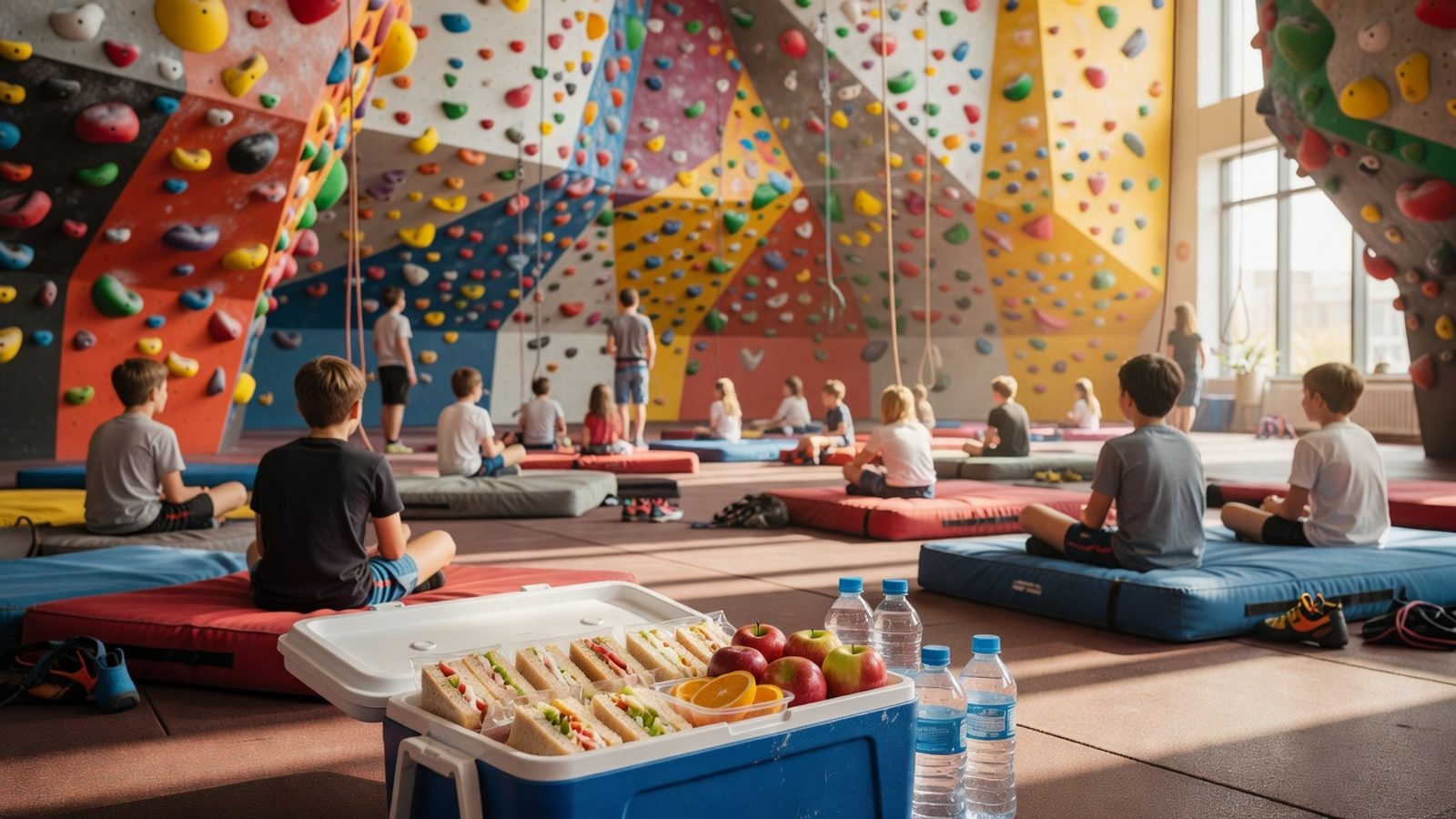
Rigby is direct about younger children: schedule the breaks, and put the food where they can see it. Fruit, sandwiches, and crackers work. Vegetables alone are too low in calories to refuel a child who is exercising. Do not force bites, and do not cap them. Pushing a clean plate, or withholding seconds, teaches kids to ignore hunger and fullness.
A practical cooler: a school-day sandwich, a plain bagel or pretzels for the hour before a round, bananas or applesauce, yogurt or cheese if dairy sits well, and a backup in case the first snack gets crushed. Offer food before the debrief. Many kids skip eating to retell the move. If the next climb is soon, keep the snack small and lower in fat.
Pack more than you think you need. Venue food is slow and often unfamiliar. Road tripping to youth competitions covers the cooler and the drive. Competition sideline etiquette covers where you can stand while they eat.
What should they drink?
Water, on a schedule of chances to drink, not a command to chug.
Rigby writes that children dehydrate more easily than adults, and that they usually drink to thirst if someone reminds them during exercise. For kids before puberty he wants water, with calories from food. Sweet drinks can make kids drink more, without clear evidence they hydrate better than water, and liquid sugar can muddy how much they have eaten. He also questions whether a sports drink helps a pre-pubertal climber who can still fuel hard efforts with fat.
For teens, water stays the daily drink. A sports drink can help during intense training, competitions, and serious attempts, which is the same context he uses for adults. Use it as a performance option for a long teen comp, not as lunch for every youth category.
Keep a bottle in the warmup area and refill it between rounds. Pale yellow urine later in the day is the home check.
What do you skip on purpose?
Skip new bars, new gels, and the energy drink a teammate's parent is handing out. An unsettled stomach on qualifiers is a food problem you cannot fix until the next event.
Skip diet talk on event morning. Rigby reports average BMIs for world-cup climbers around 22 for men and 20.4 for women, inside a normal range, and he warns parents off commenting on a child's weight. If you are worried about how much they eat across weeks, talk with their doctor.
Skip the idea that protein powder is the priority. Rigby lists modest daily protein needs for younger children: 13 grams at ages 1 to 3, 19 grams at ages 4 to 8, and 34 grams at ages 9 to 13. A normal diet covers that. A sandwich still beats a shaker bottle in a loud gym.
If nerves kill appetite, beating competition day nerves helps with the mood. A few practiced bites and water still help. After the last climb, feed a real meal within a couple of hours, carb plus protein. The youth competitions parent guide is the wider map if this is your first event.
For the nutrients that support tendon healing between events, read Vitamin C, Zinc and Healing: Nutrients for Climber Tendons.
FAQ
My child gets too nervous to eat breakfast. What should I do?
Use foods they already eat on gym mornings, in smaller pieces, earlier. A few bites at home and more in the car beat one perfect meal they refuse. Keep offering at breaks. Do not introduce a new bar on event day.
Are sports drinks worth packing for a 9 year old?
Rigby recommends water for pre-pubertal children. Sweet drinks are easy to overdo and are not clearly better for hydration. Bring water and real snacks. Revisit a sports drink in the teen years if comps are long and intense.
How much should they eat between rounds?
Enough that the next climb is not done hungry, and not a heavy fatty meal right before they tie in. A sandwich or yogurt when you have time. A banana or pretzels when the next climb is close. Let them stop when they are full.
What if they only want goldfish and a banana?
That can be a fine between-round snack if it is food they tolerate. Across the whole day, add a meal with more staying power when the schedule allows. One familiar snack is better than a nutritious food they will not eat.
Should I change fueling if they have a history of stomach pain?
Use the foods that have worked at practice, and talk with their doctor if pain, nausea, or avoided meals are becoming a pattern. Competition day is a poor time to test a new plan.
Want a parent note before the next event?
The Belay is free. It is a short email for climbing parents, including comp weekends. No paid meal plan sits behind it.
Sources
- Rigby, "Building Healthy and Strong Young Climbers, Part I," Climbing Nutrition. https://www.climbingnutrition.com/diet/building-healthy-strong-young-climbers-part-i/
- YouthClimbing.com, Nutrition and Recovery Guide. https://youthclimbing.com/nutrition/