
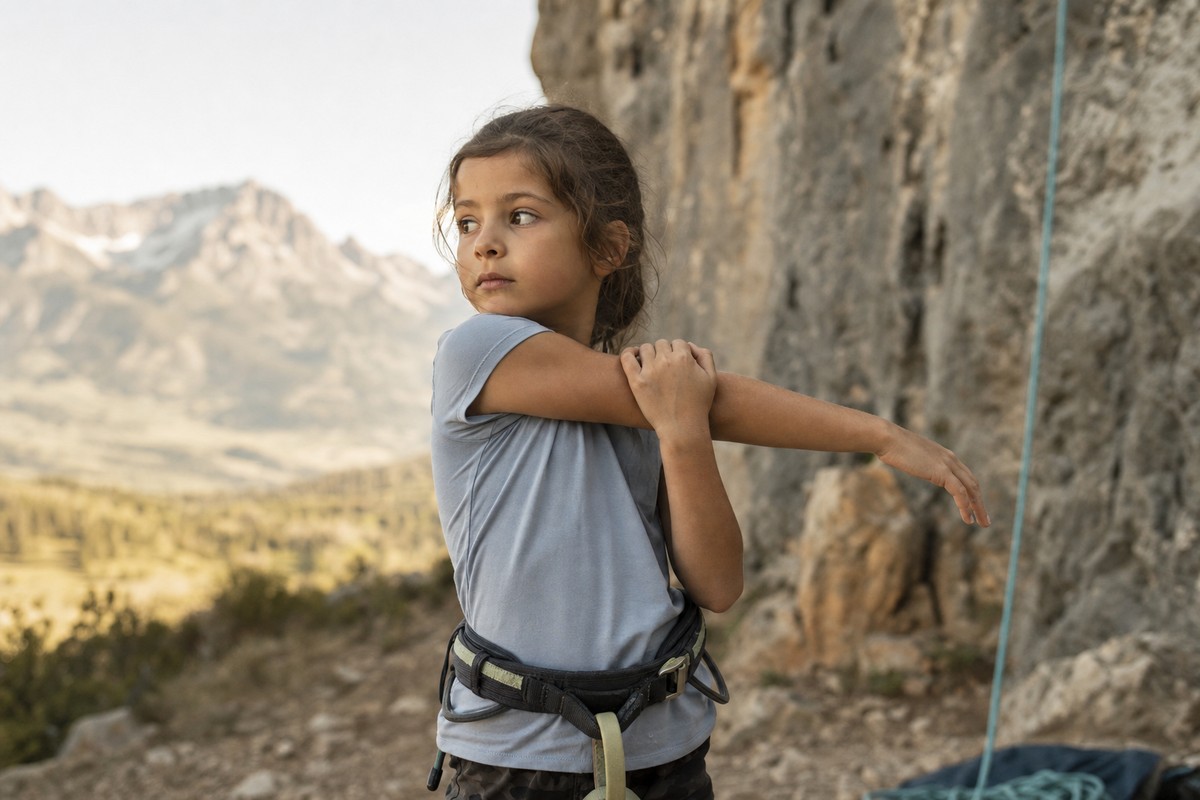
Youth climbing tends to move through four stages: play, a technique base, training structure, and competition readiness. Age bands are a rough map of when families often arrive there.
A new 14-year-old and a child who has climbed since age six are not in the same stage, even in the same birthday year. Watch what they can do this month, and what they want. Then pick the stage that matches that, not the stage their teammate is in.
Key takeaways
- Play comes first, including for older kids who are brand new. The goal is to come back.
- A technique base starts when they can notice their own feet and talk about one change.
- Training structure helps only after they want more than open gym, and it should stay simple.
- Competition readiness is a behavior and a family schedule, not a birthday.
- Kids move through these stages at different speeds. Siblings often will not match.
What are the four stages?
The four stages are play, technique, a simple training structure, and competition readiness. Each one has a job. Skipping ahead usually means the earlier job is still unfinished.
Play teaches them that the gym is a place they like, and that a few safety words mean stop. Technique teaches them to repeat movement on purpose. Training structure teaches them that rest and a plan can sit beside fun. Competition readiness teaches them to try in public and then go home as the same kid.
You can visit an earlier stage any week. A teen in a planned program still needs play. A child who competes still needs easy days where nobody keeps score. Stages stack. They do not expire.
What does the play stage look like?
Play is the right stage for many kids from about ages 5 to 8, and for any older beginner. The session works if they want to return and they can follow one safety instruction.
Expect big holds, sideways movement close to the ground, and an end when their attention ends. Thirty to forty-five minutes is plenty for a young child. Leave while the room still feels fun.
Grades do not matter here. Coming down with control matters more than the highest hold. Safety is one line at a time. Wait here. Climb down. Stay off the mat under another climber. If those words do not land when they are excited, stay with low play.
An older beginner belongs here too. A middle schooler at a first practice should not get a team plan because classmates compete. Give them novice terrain and permission to be new.
When does a technique base start?
A technique base often shows up somewhere around ages 8 to 12, sooner for kids who climb a lot, later for kids who climb once in a while. Age is only a hint. The sign is that they can feel a difference between two tries.
Look for quieter feet, hips closer to the wall, and a pause before they leave the ground. They can fall on purpose from a low spot and get back on. They can climb something twice and name one change.
One cue per climb is still the right dose. "Watch your hips" beats a paragraph from the bench. If they want video, film one try, watch it once, and put the phone away.
Play stays in this stage. Games and climbs with friends are how technique sticks. A child who only drills gets bored.
When does training structure help?
Training structure is worth a look for some kids around ages 11 to 15, and only when they already want more than showing up to play. Plenty of strong teens never need a formal plan. Plenty of 11-year-olds do better with one less practice, not a spreadsheet.
A useful week is boring on purpose. One harder day, one easier day, and rest that is real. The session has one focus, such as feet or falling, agreed with a coach.
Write that week in plain language before you copy anyone else's program. The youth climbing training plan guide shows how to do that without turning a child into a small adult. If you have no coach, keep the plan even simpler.
Growth spurts shrink the plan. If sleep, school, or pain is worse, delete a day before you add a drill. A late starter does not begin here, even if a friend is doing circuits. Match the stage, not the friend's schedule.
What does competition readiness actually require?
Competition readiness is a cluster of signs, not an age badge. They ask to try an event, or they can hear that a day might end without a medal. They can follow a practice while you are off the mat. They can have a bad round, eat a snack, and still talk about one move.
The household has to be ready too. If the drive or the weekend shape ruins the week, name that limit early. A local fun event is a better test than a season you already resent.
Many families look at a team sometime between about 7 and 10. That is a common window, not a deadline. USA Climbing's youngest division does not set a minimum age. Gyms still set their own bar, and most wait until a child can follow a practice. Check the current rules before you promise a category.
Some kids never want a result sheet. They can still get very good on open gym, outdoor days, or a class with no leaderboard. If they do want to compete, build the week before you build the travel. The training plan guide helps you see whether a normal week can absorb an event.
Why do age bands mislead parents?
Age bands mislead you when you treat a typical age as a required age. Children focus and care about sports on different schedules. Your kid this month is the data that matters.
Late starters are on time if they are on beginner terrain. A teen who climbs twice a year can still be in play. A child who is tall early may look ready for a plan their attention has not earned.
Siblings often need different maps. The 7-year-old who lives at the gym and the 12-year-old who likes one visit a week do not need the same week. When you are unsure, choose the earlier stage for a month. Skills stick when kids feel competent.
FAQ
What if my child is older and just starting?
Start at play, then move into technique when they can talk about their own movement. Do not place them by school grade.
Should every child reach the competition stage?
No. Competition is optional. Classes, open gym, and time outside can be a full climbing life.
How long does each stage last?
As long as the signs say they are still in it. Some kids linger in play and learn a lot. Speed is not the prize.
Can we skip to training because they are talented?
A gifted child still needs to like the gym, place their feet, and rest. Add structure when they ask for more and a coach agrees. The training plan guide is where to design that week.
What should I say when a teammate is ahead?
People start at different times and care about different goals. Point your child at their own next try. Comparisons in the car become the voice they hear on the wall.
How do I know it is time to change stages?
Move forward when the current stage feels easy and they ask for a new kind of challenge. Move back when fear, pain, or a growth spurt shows up. Neither move is a demotion.
Where should you read the next age question?
The Belay is the free YouthClimbing.com newsletter for parents. Notes on first visits, gear, safety, and the youth season go out as new guides are published. Join The Belay. Unsubscribe any time.