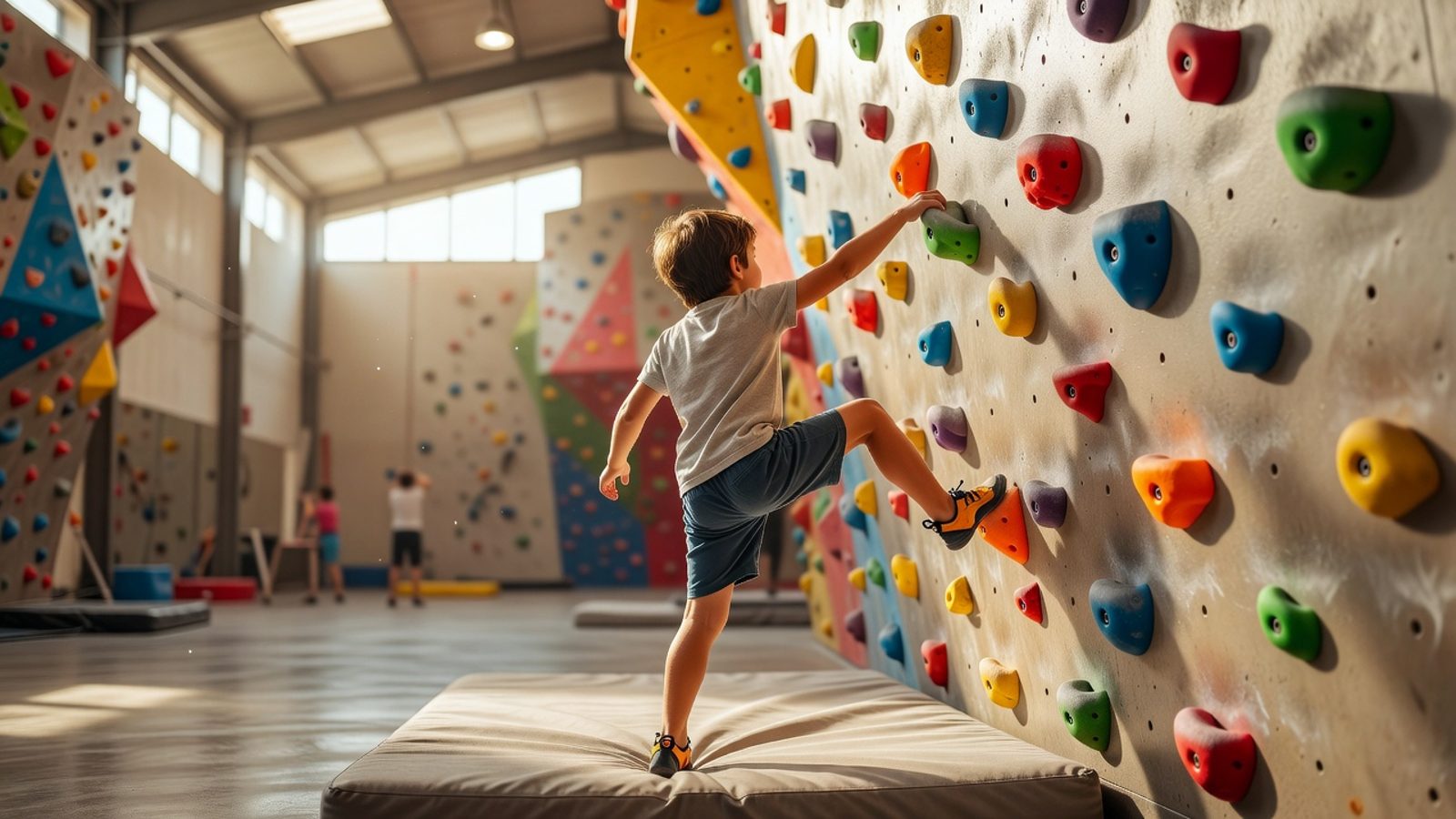
A short climber usually needs a different sequence, not a growth spurt. Hips turned in, feet stepped higher, and a hand on the small hold between the big ones will cover more reaches than waiting to get taller.
Height still matters on some moves. A hold set for a long arm can be a dead end for a child. The useful work is learning which moves have another answer and which ones to walk past. That skill sits inside ordinary training, next to balance and footwork, and it shows up early in the youth climbing skill stages.
Key takeaways
- Turn the hip in with a backstep or drop knee before you look for a longer arm.
- Step the foot higher, then reach.
- Use the small in-between hold to move the feet, then go again.
- Pick climbs that have those holds. Skip spans that only work as a long static reach.
- A child who hears "you are too short" all afternoon will stop looking.
Why does the same move feel impossible for a smaller kid?
Setters often space holds for a longer wingspan. A smaller child meets a gap where a taller climber meets a comfortable reach.
Coach and writer Lucie Hanes describes the short climber's side in Shorty Beta (Training For Climbing, 2023). She writes as a 5-foot-1 adult, and the movement ideas transfer: get closer to the wall, use the feet as extra reach, and break a long move into smaller ones. She also notes that some rock has no other option. Indoor gyms usually do, because another route is a few panels away.
Say this out loud. "That gap is set long. We can look for a closer hold, or we can pick a different climb." Height stays a fact about the move, not a verdict on the child.
Which techniques add reach without jumping?
Start with the body, then the feet, then the hands. Hanes puts techniques that keep a short climber close to the wall first, and that order works for kids.
Backstep and drop knee. The outside edge of the shoe lands on the foothold, the knee drops toward the wall, and the hip turns in. Hanes writes that this can give short climbers as much as a few extra inches by closing the gap between belly and wall. For a child, try "hide your belly button." If the feet still skid, use the footwork drills.
High feet before high hands. If the hands cannot reach, the feet may still have a step. Match a foot to a big handhold, or step to the highest foothold they can use without the hips sagging out. Hanes's line is that higher hands begin with higher feet. A heel placed on a hold can act like another hand, as long as it is on purpose. If it pops off, they step down and try a smaller version.
The in-between hold. When the goal hold is past their reach, look for the small sidepull or undercling between here and there. Hanes writes that even a poor intermediate can be enough to move the feet and try again. Kids skip these because they are a different color. Tell them extra holds are allowed while they learn the reach. Hand, foot, hand is a real sequence.
Stay close through the middle. A loose stomach lets the hips fall out, and the reach gets longer. On an easy traverse, have them pause with arms and legs long and the hips near the wall, then move one foot up without the hips swinging away. This is a game of "sticky hips," not a core workout. Hanes also describes campus training and plyometrics for adult short climbers. Leave that section for adults. Young climbers build this skill on easy boulders. The notes on finger strength for young climbers and safe campus-board alternatives are the boundary if someone suggests hangboard or campus work.
How do you pick routes that fit a smaller climber?
Route choice is the other half of the technique. A beautiful problem with two holds and a span is a bad classroom.
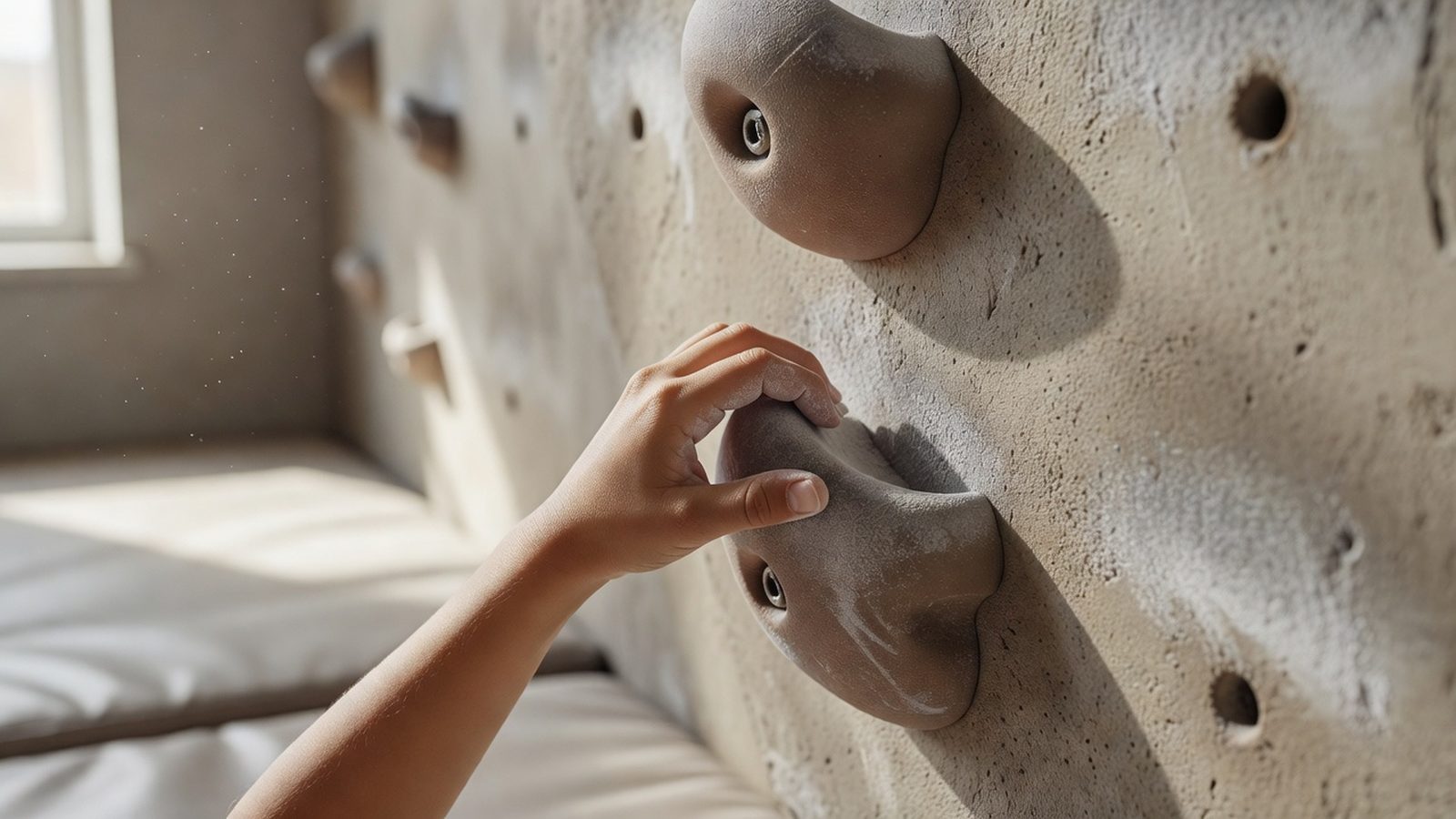
Look for footholds near handholds, a small hold between the two big ones, and a wall that is vertical or only slightly overhanging. Steep caves ask for tension many kids do not have yet. Prefer a climb they can reverse. If they can climb down the high step, they trust it next time.
Walk past a move that only works as a big jump. Hanes suggests learning dynamic moves in the gym before anyone takes them outside. For kids, that means low, willing, and later. A jump is not the fix for every reach. Also walk past a full-stretch lock-off with the feet cutting loose. If a finger or shoulder hurts, stop that move and pick another climb. A doctor is who sorts out an injury.
One session is enough to teach the idea. Warm up on an easy traverse. Pick one long move. Try it straight, then with a backstep, then with a high foot, then with the small hold in the middle. Stop when one version works. Remember which one, so next week does not start from zero.
What should a parent say on the mat?
Name the route, not the child. "That next hold is far" helps. One cue at a time: "Turn your hip in," or "Step higher before you reach." Stand where they can hear you and where you are not under another climber.
The spot to stand, and the rest of the floor rules, are in Climbing Gym Rules for Kids: Supervision and Etiquette.
Let them skip the move. A kid who leaves one long problem and finishes three others had a good session. If a coach is around, ask them to point out a few climbs with in-between holds. The goal is a child who searches, not a child who waits to grow.
FAQ
Are short kids at a disadvantage in climbing?
On some moves, yes. Across a whole session, they can choose other routes. Shorter climbers often fit small holds and tight positions. The work is picking a sequence their body can do today.
What is a backstep, in kid language?
The foot steps onto the hold with the outside edge of the shoe, the knee turns down toward the wall, and the hip comes close. It is a way to get the shoulder nearer to the next hold. Practice it on easy ground before you use it on a move they care about.
Should they jump for holds they cannot reach?
Only low, on purpose, once they already land safely. Learn the high foot and the in-between hold first. Skip jumps when they are tired or the mat is crowded.
Do they need special shoes because they are short?
A shoe that fits, and that they can stand on a small edge in, is the priority. Hanes, writing for adults, keeps a softer shoe for small edges and a stiffer one when she wants more support to stand up. For kids, replace shoes when the toes curl or the foot hurts. A second pair is not a reach strategy.
When is a move actually impossible for their size?
After a higher foot, an in-between hold, and a hip turn, the next hold can still be out of reach without a jump they are not ready for. Leave it. The next set will have a different gap.
Can this turn into a fight about height?
Yes, if every hard move becomes a speech. One cue, then a choice of easier climbs. Notice the sequences they solve.
Keep the ideas coming
The Belay is a free email for climbing parents. Technique notes, gym visits, and season planning show up there.
Sources
- Lucie Hanes, "Shorty Beta: Hacks for Short Climbers to Maximize Their Reach," Training For Climbing, August 21, 2023. https://trainingforclimbing.com/shorty-beta-hacks-for-short-climbers-to-maximize-their-reach/