The email says "team tryouts, Saturday, three hours, bring shoes." Your kid is thrilled. You are trying to guess whether this is a friendly placement session or a cut. Our recreational versus competitive team page compares the two tracks. It does not walk through tryout evaluation: what coaches watch, how long it lasts, or what "making team" usually means.
This guide fills that gap for a first-time parent. Formats vary by gym. The pattern below is what published tryout pages and coaches describe most often. It is not a promise that your gym will run it this way.
Key Takeaways
- Rec programs on this site have no tryouts. Competitive teams commonly use a tryout or an evaluation period. That distinction is already on our rec-versus-competitive comparison.
- Published gym tryout pages evaluate more than raw difficulty. Übergrippen Denver lists mental fortitude (motivation, focus, attitude) alongside climbing skills (technique, safety, sequencing, strength).
- A typical tryout block runs about two to three hours. Übergrippen publishes a 3-hour session with a flashed format on ropes and a modified redpoint on boulders, plus work with other climbers.
- Many gyms place kids on the "most fitting" team or club after the session, not a single yes-or-no cut. Rec or developmental placement is a normal outcome, not a failure.
- What to bring is simple: shoes that fit, a water bottle, a snack, and a parent who stays out of the coach's earshot during the session.
Is a tryout a cut, or a placement?
Ask that question before Saturday. Some gyms run a true cut: a limited competitive roster and a waitlist. Many more run a placement: coaches watch the session, then put each kid on the rec club, the developmental team, or the competitive team that matches their current skill and commitment.
Übergrippen Denver's published team tryouts page is a clear example of the placement model. After tryouts, "we will place the climber on the most fitting team or club for the season." That sentence is the one worth copying into your notes. If your gym cannot say whether the session is a cut or a placement, you do not yet know what "not making team" means.
Our rec-versus-competitive page already states that rec programs have no tryouts and that competitive teams commonly use a tryout or evaluation period. If your child is still exploring the sport, a rec class is the usual first step. A tryout is the next conversation, not the first one.
How long does a youth climbing tryout last?
Plan on two to three hours, plus check-in. Übergrippen publishes a 3-hour block. Other gyms run a single practice-length session of about 90 to 120 minutes, or a short evaluation period spread across a week of practices. Ask for the end time so you are not guessing in the parking lot.
Check-in is usually 15 minutes early: waiver, shoes on, water filled, kid in the lobby. Parents often stay for the first five minutes, then sit in the viewing area or leave and come back. Coaches cannot evaluate coachability if a parent is translating every instruction.
What should you bring?
Keep the bag light. The session is a sample of practice, not a competition.
- Climbing shoes that fit. If they only have rentals, say so at check-in. Some gyms include a day pass and rentals for non-members.
- Athletic clothes they can move in, plus a layer. Gyms are cold between burns.
- A water bottle and one snack they will actually eat.
- Any inhaler or usual medical item they already use at the gym. This is not a sports-physical substitute.
- A charged phone for pickup, not for filming every attempt from the benches.
Leave the brand-new downturned competition shoe at home if they have never climbed in it. A tryout is a poor time to break in painful shoes. Coaches would rather see real movement in a comfortable pair.
What do coaches actually watch?
Hard sends help. They are not the whole scorecard. Published tryout criteria keep repeating the same two columns: how the kid climbs, and how the kid works.
Übergrippen lists mental fortitude as motivation to try hard, focus on the task and on coaches' instructions, and attitude toward teammates, coaches, and other members. It lists climbing skills as technique knowledge, safety (knowing and following gym rules), reading sequences, talking about beta, and strength: how difficult a boulder or route they can climb.
That mix is the useful parent translation. A kid who flashes the hardest warmup and then talks over the coach is not a lock. A kid who falls a lot, resets, and tries the note the coach just gave them is often the one who gets a team invite. The 2016 Climbing Business Journal survey this site already cites put average youth-team coach-to-athlete ratio near 1:6. Coaches in a tryout are asking, in effect, "Can I work with this kid in a group that size?"
Drills versus routes: what does the session feel like?
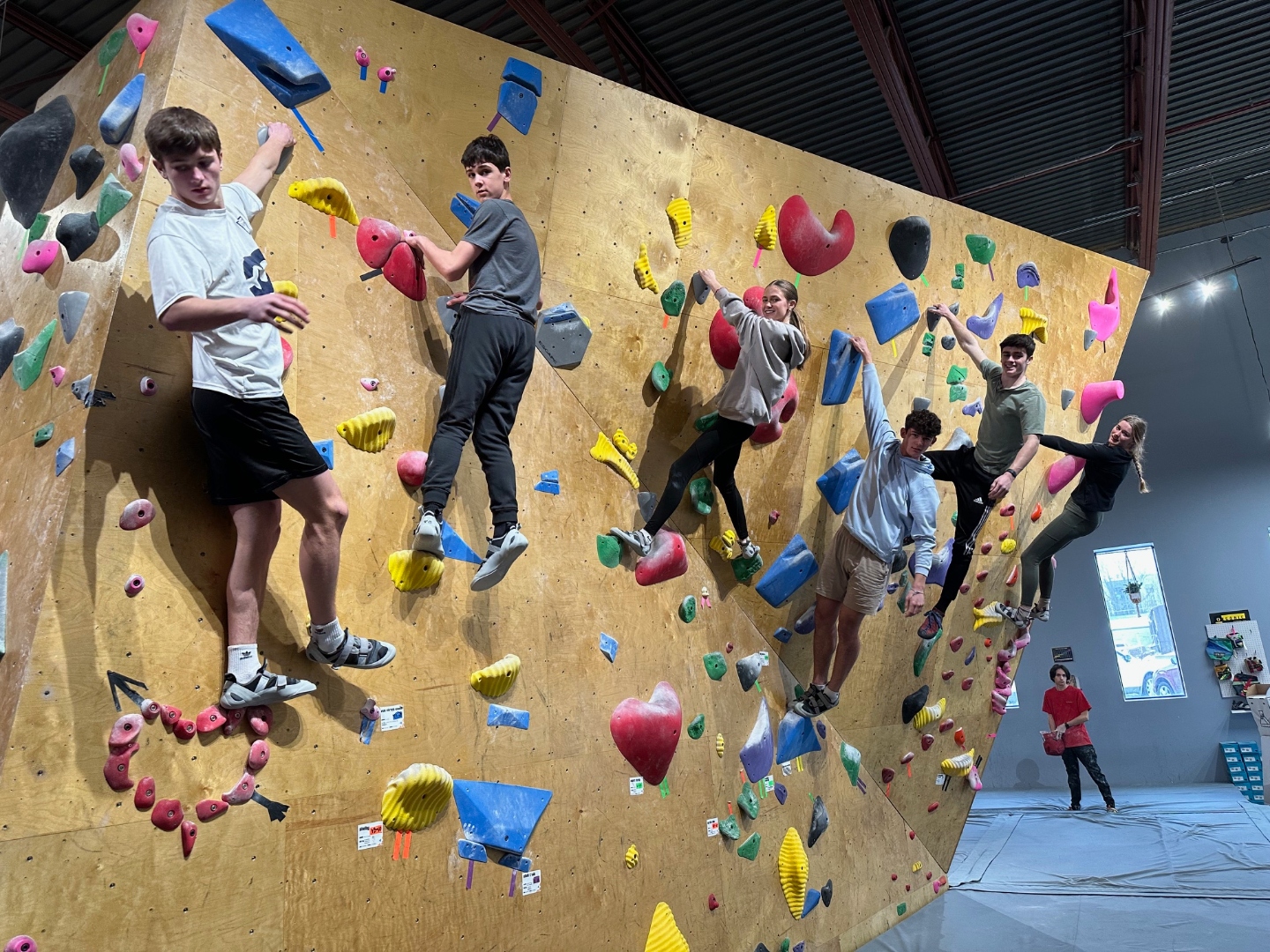
Most tryouts mix a short group warmup, a few movement drills, then scored or observed climbing. The climbing block is often a flash format on ropes (one go, after seeing it or getting a quick preview) and a limited-attempt format on boulders. Übergrippen describes "a flashed format for ropes and modified repoint for boulders," and tells climbers they will have three hours to work with others on their hardest climbs.
Expect some waiting. Expect some grouping by age. Expect a coach to give a cue and then watch whether your child uses it on the next attempt. That last piece is coachability, and it is usually more predictive than the grade on the tag.
If the gym also runs a short written safety or "Akademie" style quiz for kids new to their programs, that is about gym rules, not a midterm. Ask ahead of time so your child is not surprised.
What does "making team" versus rec team usually mean?
At a placement gym, three outcomes are common:
- Competitive team. More days per week (this site already cites 3 to 5 sessions, 2 to 3 hours), a season calendar, and USA Climbing events if the team competes. Dues are higher. Travel is expected.
- Developmental or junior team. A middle track at some gyms: more structure than rec, fewer travel weekends than the full competitive team. Ask whether this track exists. Not every gym has it.
- Rec or club. One or two sessions a week, no tryout next time, mixed ability. This is the right landing spot for a kid who liked the tryout but is not ready for the calendar.
A rec placement after a tryout is information, not a verdict on talent. Our team-evaluation guide is the next read if the gym offers a competitive spot and you need to decide whether to sign. Bring those questions to the offer email, not to the tryout floor.
How should a parent behave during the session?
Watch if the gym allows it. Do not coach. Do not grimace at a fall. Do not walk onto the mats. If your child looks over, a thumbs-up is enough. Save the debrief for the car, and let them talk first.
Afterward, ask the coach one process question: "When will we hear about placement, and what does each track actually cost and require?" Then wait for the written answer. A hallway yes is not a season contract.
The big picture
A tryout is a sample of how your child works with a coach and a group, not a one-problem talent show. Go in knowing whether the gym cuts or places. Pack shoes that fit. Stay out of the session. Treat a rec placement as a good season, not a failed one.
If you are still deciding which track fits, stay on Recreational team or competitive team: which is my child ready for?. That page compares the products. This one is only about the Saturday you walk into.
Frequently Asked Questions
What happens at a youth climbing team tryout?
Most gyms run a two- to three-hour session with a warmup, movement drills, and observed climbing on boulders and ropes. Coaches watch technique, safety, and how a child takes feedback, not only the hardest send. Many gyms then place kids on the rec, developmental, or competitive track that fits.
How long is a climbing team tryout?
Published examples run about three hours. Other gyms use a single 90- to 120-minute practice or a week-long evaluation. Ask for check-in time and end time. Add a buffer so the session is not a rush from the parking lot.
What do coaches look for at a climbing tryout besides strength?
Attitude, focus, coachability, and safety habits. Übergrippen Denver's published list includes motivation, listening to coaches, working with others, technique, sequence reading, and following gym rules. A kid who uses the last cue often outranks a kid who only flashes the warmup.
What should my child bring to a climbing team tryout?
Shoes that already fit, athletic clothes, water, and one snack. Rentals are fine if that is what they use. Do not break in a painful new competition shoe on tryout day. Bring any usual inhaler or medical item they already climb with.
What if my child does not make the competitive team?
At placement gyms, that usually means a rec or developmental track, not a ban from the gym. Rec programs on this site have no tryouts and meet once or twice a week. A rec season is a normal, useful outcome. Ask what the written placement options are before Saturday.
Does a rec climbing program require a tryout?
No. This site already describes rec programs as no-tryout, mixed-ability, and often grouped by age. Competitive teams are the product that commonly uses a tryout or evaluation period. If your child is still exploring, start in rec.