
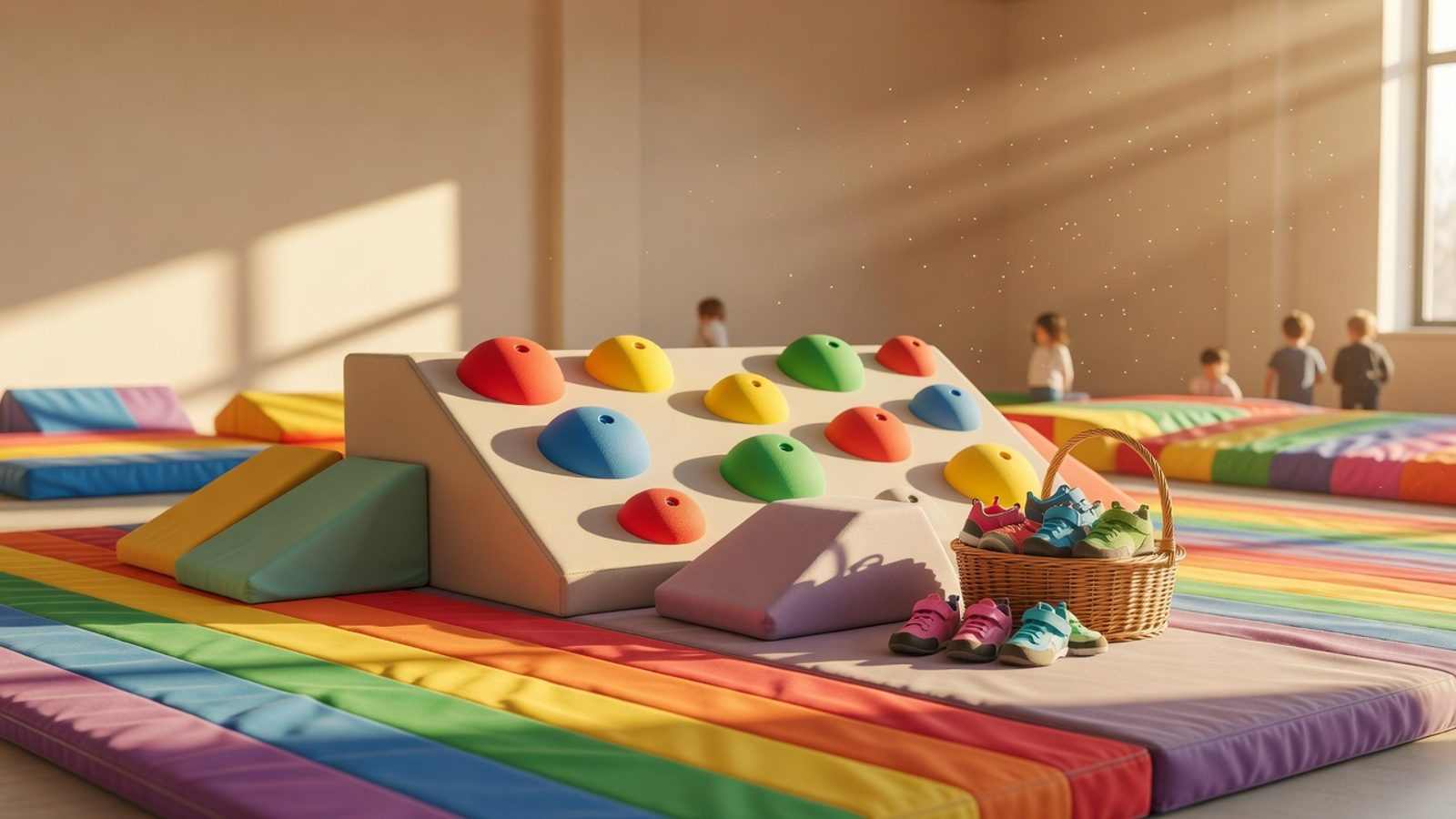
Kids ages 5 to 9 learn to climb by moving, not by listening to a long demo. A good session at this age is short, playful, and full of tiny successes. It is not a smaller version of a teen team practice.
Heather Reynolds, a kinesiologist and Climbing Wall Association trainer, lays this out in Timing Is Everything. She uses the long-term athlete development stages. Ages 5 and the early school years sit in Active Start, when climbing is still a playground skill. Ages 6 to 9 sit in what that model calls the FUNdamentals stage, when basic pushing, pulling, and hopping over footholds get refined. The training guide uses the same idea: match the week to the body in front of you, and save hard finger tools for much later.
Key takeaways
- Ages 6 to 8 learn best by doing. A knot demo does not stick the way a short, hands-on try does.
- Keep instructions to one short step. Positive feedback and repetition matter more than correction at this age.
- Do not push competition between ages 6 and 9. Interest may show up. Pressure does not help.
- Around ages 9 to 11, bones are still growing. Weight training raises injury risk because tendons can be stronger than the bone.
- Other sports and free play belong in the week. Climbing-only calendars can wait.
What does a 5 or 6 year old actually need from climbing?
They need a positive first meeting with gravity. Reynolds points out that kids already climb on playgrounds and furniture, and that a few tumbles teach respect for falls. If the first gym day feels too hard because basic movement is missing, that afternoon can be why they do not want to come back.
So the session looks like play with a little guidance.
- Low bouldering and traversing, with an easy way to stop.
- Games that include hopping, balancing, and choosing a foothold.
- An adult close enough to spot and to end the game while it is still fun.
- No grade chasing. The win is "I tried that blue hold," not "I sent the V."
If your child is still deciding whether climbing is their sport, the getting started guide covers the first gym visit. Movement on playgrounds and easy mats is the right level for the youngest end of this range.
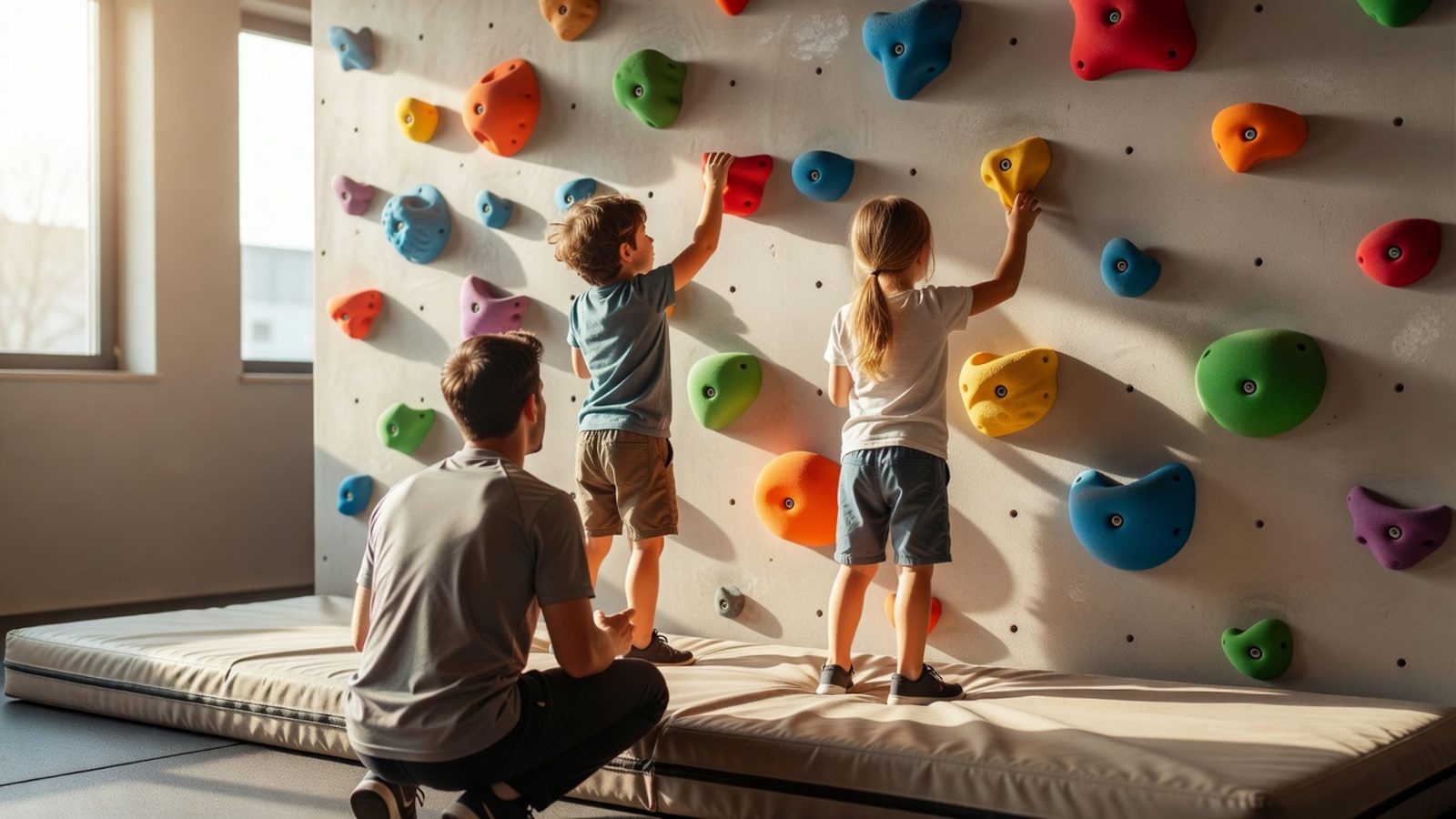
How should a coach teach ages 6 to 9?
Reynolds is specific enough to steal, whether you coach or you are the parent on the mat.
Between ages 6 and 8, a child learns best by doing. Showing a figure-eight from across the mat does not make the knot easier. Attention is short. Smaller groups, or pairs, hold focus better than a circle lecture.
Instructions should be short and step by step. "Put your foot on the big green hold" beats a speech about hip position. Youth this age struggle with criticism and with failing in public. Positive feedback, repetition, and building on a success are what keep them in the session.
The movements to refine are ordinary ones. Push and pull. Hop over a foothold. Use the feet on purpose. Reynolds notes that kids this age may or may not care about competing, and that it is wise not to push that part of the sport. Games borrowed from other sports are the teaching tool. Add-on, a traverse with a silly rule, a scavenger hunt for colors. The challenge is inside the game.
What should the week look like at home?
You do not need sets and reps. You need a rhythm a 7 year old can stand.
- One or two gym visits, short enough that they leave wanting more. If the session runs long, the last stretch is often tears, not learning.
- Easy climbing at the start, every time. A hard first problem on cold fingers teaches fear, not footwork.
- A job they can finish. "Cross the wall and name each foothold" is a complete session.
- A stop you both agree on before you walk in. "Three problems, then a snack" prevents the bargain at the door.
Multi-sport weeks help. Reynolds writes that specializing is often a poor fit even in the early years when competition starts to look fun. A swim lesson or a soccer hour builds other movement skills and other coaching styles. It is part of how a 5 to 9 year old gets coordinated.
If a team flyer shows up in the lobby, read recreational versus competitive team before you sign. Many kids this age do better in a rec class or a camp than on a comp calendar.
What changes around age 9?
The next stage in Reynolds's piece, Learning to Train, sits around ages 9 to 11. Competition becomes more interesting. Kids start to enjoy getting something right, and they get more frustrated when it does not.
The body is stronger, and the bones are still growing. She flags a point parents miss: injury at the growth plate in this stage can have lifelong effects. Tendons are often stronger than the growing bone, so a child can damage bone more easily than the tendon. Asking kids in this window to train with weights raises injury risk. That is a coaching limit, not a challenge to work up to.
You can still teach. You just teach with terrain, games, and feet, not with a hangboard or a weight belt. Footwork drills are fair game much earlier, because careful feet unload the hands.
How do you know the session was a good one?
Skip the grade report. On the way to the car, ask whether they tried something new and whether they can name one thing their feet did. A proud kid who repeated an easy traverse had a better session than a crying kid who almost did the hard one. Reynolds's point is that a positive experience is what keeps children active.
If pain shows up in a finger, elbow, or anywhere that changes how they move, call a pediatrician or a physical therapist who sees kids in sport. The safety guide covers the injury side. At ages 5 to 9 that conversation should be rare. If it is common, the week is too hard.
When the same spot keeps hurting, read Overuse Injuries in Young Climbers: A Parent's Guide.
FAQ
Should my 6 year old join a competitive team?
Reynolds advises against pushing competition for youth ages 6 to 9, even if the child shows some interest. A rec class, a camp, or family gym time usually fits the way this age learns. Revisit teams when they ask, and when the program still looks like games.
Why does my child ignore the coach's demo?
Between ages 6 and 8, kids learn by doing. A long demonstration, especially of something fiddly like a knot, often does not transfer. Short steps, a turn to try, and another short step work better.
How long should a session be?
Long enough to warm up, play, and stop while it is still fun. If attention falls apart or the mood crashes, the session was too long or too much talking. End on a success they can repeat next time.
Is it a problem if they only want to play on the mats?
Mats, tunnels, and easy traverses are the work at Active Start and early FUNdamentals. Forcing high problems before basic balance and falling skills exist is how first visits go badly.
When can they lift weights or hang on a fingerboard?
Reynolds writes that in the Learning to Train years, around ages 9 to 11, weight training raises injury risk because growth plates are still open and tendons can outpull bone. Fingerboards are a later, coach-guided decision. Climbing easy terrain is the strength work for ages 5 to 9.
What if my 9 year old is bored with easy climbs?
Raise the puzzle, not the load. New games, new foot rules, a little top-rope, and other sports keep the week interesting. Frustration grows in this stage, so keep the wins frequent. Save max pulls for later years.
Want the next age stage in your inbox?
The Belay is a free parent newsletter. It covers how sessions change as kids grow, without a paid plan or an app to buy.
Sources
- Reynolds, "Timing Is Everything: Age-appropriate Training For Kids," Climbing Wall Association, March 4, 2021. https://www.cwapro.org/blog/timing-is-everything-age-appropriate-training-for-kids