
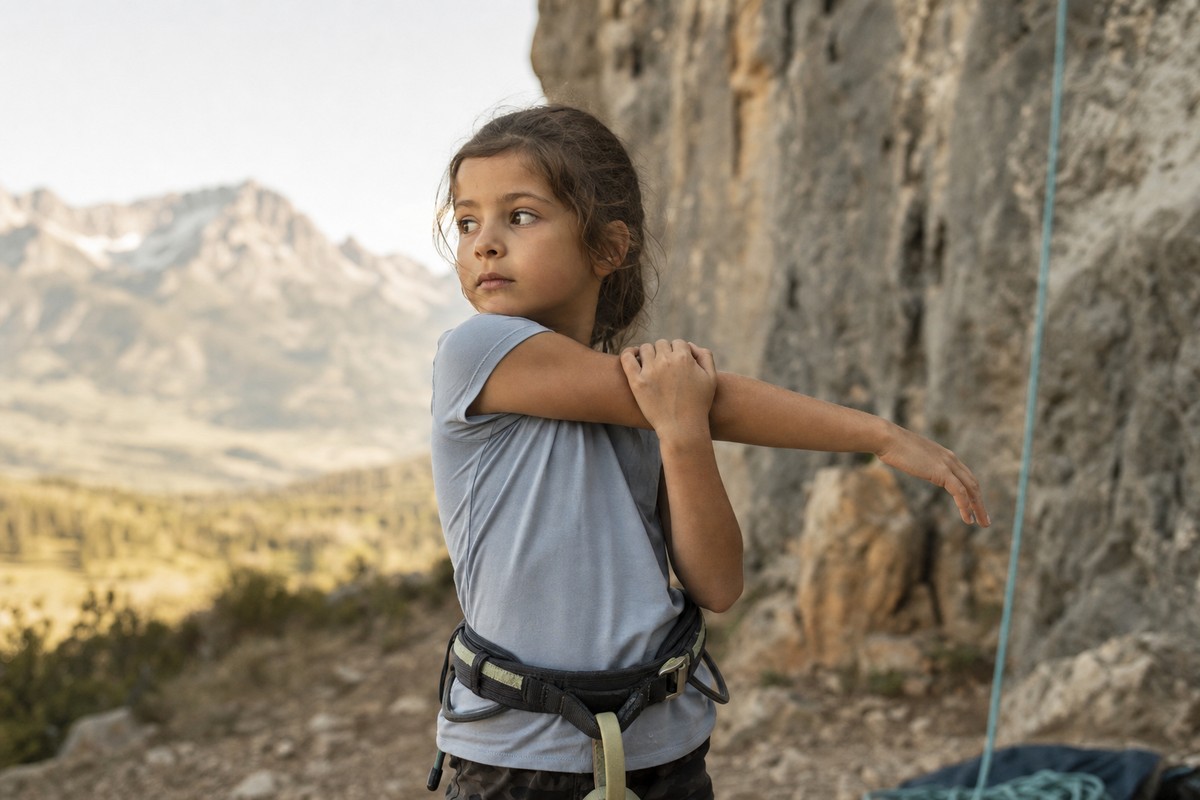
Your kid has been climbing top rope for a year, maybe two. They know the routine: tie in, have the knot checked, climb, get lowered. Then one Tuesday practice, they watch a fifteen-year-old on the team clip a rope through a quickdraw ten feet above the last bolt, take a real fall, and swing gently into open air. Your kid turns to you in the lobby with the exact look kids get right before they ask for a dog. "Can I do that?"
Key Takeaways
- USA Climbing's official youth rulebook keeps the U15 category (roughly ages 12 to 14) on top rope only for all rope events, which tells you competitive readiness for lead is a multi-year build, not a single test.
- A 2022 Climbing Wall Association field study of nearly 700 climbers across eight gyms found that only 56% actually double-checked their belay device threading, even though 85.7% said in a survey that they always do. The gap between self-report and observed behavior is the real safety issue at every level, not just for beginners.
- A typical lead certification test requires climbing an unfamiliar route at least one letter grade below the climber's onsight level, clean clipping, clear verbal communication, and a purposeful, unannounced fall for both the leader and the belayer to catch.
- Minimum age for lead certification varies widely by gym because of differing liability insurance policies, so "is my kid old enough" often has a different answer at the gym down the street than at the one across town.
- Readiness is mostly about consistency under fatigue and stress, not raw climbing grade. A kid who climbs 5.10 but forgets to clip when tired is not ready. A kid who climbs 5.8 flawlessly, every time, usually is.
This post is a practical guide for the climbing parent: what actually changes when a kid moves from top rope to lead, how gyms test for readiness, the signs worth watching for at home, and how to think about timing so the transition builds confidence instead of testing luck.
1) What actually changes between top rope and lead
On top rope, the rope already runs from the climber's harness, up through an anchor at the top of the wall, and back down to the belayer. If a climber falls, they drop a few inches at most. The system is built to be nearly foolproof.
On lead, the climber carries the rope up with them and clips it into protection points as they climb. Until that next clip, a fall means dropping roughly twice the distance to the last piece of protection, plus rope stretch. The belayer's job changes too: instead of taking in slack to keep the rope snug, a lead belayer has to feed out slack smoothly so the climber can move and clip, while staying ready to catch a fall with a "soft catch" that cushions the impact.
In short, lead climbing adds three new sources of risk that top rope removes almost entirely: clipping errors, fall distance, and a belayer who has to actively manage slack instead of just taking it in. None of these are exotic. They are learnable skills. But they are the reason gyms treat the lead transition as a real certification, not a formality.
2) How gyms decide a climber is ready
Most climbing gyms use a formal lead test before allowing anyone, adult or youth, onto lead-legal routes. The details vary by gym, but the shape is consistent:
- The climber leads an unfamiliar route, usually one number grade below what they climb comfortably on top rope, so the test measures habits rather than raw strength.
- The climber must clip correctly at every bolt: no back-clipping, no z-clipping, no skipped clips, and rope always running on the correct side.
- The climber communicates clearly throughout: "climbing," "clipping," "falling," and any other standard calls the gym uses.
- Somewhere in the route, the climber takes an intentional, unannounced fall, and the belayer has to catch it correctly with a soft catch and no excess slack.
- The belayer is tested at the same time: paying out smooth slack, staying attentive at the first few clips (the highest-risk zone on any lead route), and demonstrating they can catch a leader fall without letting the rope go slack or yanking the climber into the wall.
This dual structure matters. A gym is not just certifying your kid to lead. It is certifying your kid to belay a leader, which is a materially different skill from belaying top rope. Many programs require both certifications before a young climber can lead with a peer instead of only with a coach.
3) Why age alone is the wrong question
Parents often ask "what age can my kid start lead climbing," expecting a clean number. There isn't one. Some gyms allow lead certification at 12. Others set the minimum at 14 or higher because of their liability insurance terms, independent of how skilled a particular kid is.
USA Climbing's own youth competition structure reflects this caution at the national level. In recent seasons, the U15 category (roughly ages 12 through 14) has competed top rope only for all rope disciplines, with lead climbing reserved for U17 and older divisions. That is not because 13-year-olds cannot physically climb lead. It reflects a broader judgment that consistent decision-making under the added risk of lead climbing tends to mature later than the physical ability to do it.
Researcher Jon Heshka's 2022 field study for the Climbing Wall Association put the underlying issue plainly: "Every year, people get hurt in climbing gyms. The cause is almost always climber error, i.e., human factors." That finding held across nearly 700 climbers of all ages and experience levels, not just kids, which is exactly why gyms build a formal test into the lead transition instead of taking a climber's word for their own readiness.
The practical takeaway: treat your gym's minimum age as a floor, not a green light. A kid who clears the age bar still needs to clear the actual skill and judgment bar.
4) Signs your climber might actually be ready
Instead of asking "how old is old enough," ask these questions instead.
- Do they belay top rope flawlessly, every single time, without reminders? If a coach or parent still has to prompt "check your device" or "watch the rope," the belay fundamentals are not automatic yet, and lead belaying adds more to track, not less.
- Do they stay calm and clear-headed when tired? Lead tests and real lead falls tend to happen later in a session, after warm-up energy has faded. A climber who gets sloppy or irritable when fatigued is a harder bet on lead.
- Have they taken real falls on top rope or on an auto belay without freezing or panicking? Comfort with falling, not just tolerance of it, is a genuine prerequisite skill.
- Can they narrate what they are doing while they climb? "Clipping now," "that's my next hold," "I'm pumped, might fall" are the verbal habits that keep a belayer in sync with a leader. Kids who climb silently often need more coaching before lead, regardless of grade.
- Do they want this, or do they want to keep up with a teammate? Motivation matters. A kid who is genuinely curious about lead technique tends to absorb the safety habits faster than a kid who is mostly chasing status.
If most of these land as yes, your climber is a reasonable candidate for a lead class. If two or more land as no, that is useful information, not a verdict. It just means more reps on top rope first.
5) What the first few months on lead usually look like
Once a young climber is certified, most programs still keep a light structure around early lead climbing:
- Grade regression is normal. A kid who onsights 5.10 on top rope might climb 5.7 or 5.8 on lead at first. Managing rope, clips, and mental load while climbing uses real bandwidth. This is not a step backward. It is the skill catching up to the confidence.
- Coaches often require a "spotter" period. For the first several sessions, many gyms want a coach or experienced belayer nearby, even if the certified belayer is technically capable, simply because habits are still forming.
- The first real fall matters more than the test fall. The test fall is planned. The first accidental fall, missing a clip or getting pumped mid-route, is the one that actually tells you how the training held up. Expect a rattled kid after that first real one, and expect them to bounce back faster than you'd guess.
- Clipping technique keeps improving for months. Efficient, one-motion clips take real mileage to develop. Early on, kids often overgrip and waste energy fumbling the rope into the draw. That smooths out with practice, not lecturing.
6) A simple decision framework for parents
If you are trying to decide whether to encourage a lead class this season, work through these in order:
- Check the gym's actual requirements, not general online guidance. Ask what grade, what test, and what minimum age apply at your specific facility.
- Ask the coach directly, using a specific question: "Do you think they're ready for a lead class, and if not yet, what should we work on first?" Coaches see belay habits under pressure that parents rarely witness.
- Watch one full top rope session with belay technique specifically in mind. Not climbing form. Just the belay: device check, attentiveness, slack management, communication.
- Talk to your kid about falling, honestly. Ask what they think happens on a lead fall and how it differs from top rope. Gaps in understanding here are more telling than gaps in physical skill.
- If the answer is "not yet," give a concrete next step, not a vague "maybe next year." Something like "let's nail belay checks every single time for a month, then revisit" turns a no into a plan.
7) The big picture: what this transition is really building
Lead climbing is often talked about as a bigger milestone than it is: a rite of passage, a sign a kid has "made it" as a climber. It is worth reframing. The real value of the lead transition is not the grade or the milestone. It is the training in exactly the kind of judgment climbing is supposed to build: staying calm under real consequence, communicating clearly under pressure, and trusting a system and a partner instead of trying to control everything alone.
Kids who move to lead a little later, with solid belay habits and honest comfort with falling, tend to progress faster once they start than kids who are pushed onto lead early on pure climbing grade. There is no prize for being first in the group to lead. There is a real, lasting benefit to building the habits that make lead climbing something your kid does safely for the next decade, not just survives once.
If your climber is asking about lead and you are not sure yet, that uncertainty is a completely normal place to be. Talk to the coach, watch the belay habits closely for a few weeks, and let the decision come from what you actually observe, not from what the kid down the row is already doing.
If your climber is building toward this milestone, our guide to warm-up routines for young climbers covers the same kind of consistency-under-fatigue habits that make a lead transition go smoothly.
Frequently Asked Questions
What is the minimum age for lead climbing certification at most gyms?
There is no single national standard. Many gyms certify climbers as young as 12, while others set the minimum at 14 or older because of liability insurance requirements. Always check the specific policy at your gym rather than assuming a general age applies.
How long does it usually take to go from top rope to a lead certification?
Most kids who climb consistently, once or twice a week, are ready to attempt a lead class after 12 to 18 months of solid top rope experience, though this varies a lot by individual maturity and how often they climb. Coaches are the best judge of timing for a specific kid.
Is lead climbing more dangerous than top rope for kids?
Lead climbing carries meaningfully more fall distance and more room for clipping or belaying error than top rope, which is why gyms require a dedicated certification test with both a climbing and a belaying component. With proper certification, supervision, and consistent habits, the added risk is well managed, not eliminated.
Should my child get lead certified even if they are not competing?
Yes, if they are interested. Lead climbing is a core skill for outdoor climbing and long-term progression, not just a competition requirement. Many recreational climbers lead regularly without ever entering a competition.
What if my child fails their first lead test?
This is common and not a setback. Gyms usually explain exactly what needs work, whether it is clipping technique, communication, or belay consistency, and kids can retest once they have practiced that specific skill. Treat a failed test as useful feedback, not a discouraging result.
Can a top rope belay certification carry over to lead belaying?
No. Lead belaying is a distinct skill involving slack management and soft catches that top rope belaying does not require. Nearly every gym requires a separate lead belay certification even for climbers who are already certified to belay top rope.