
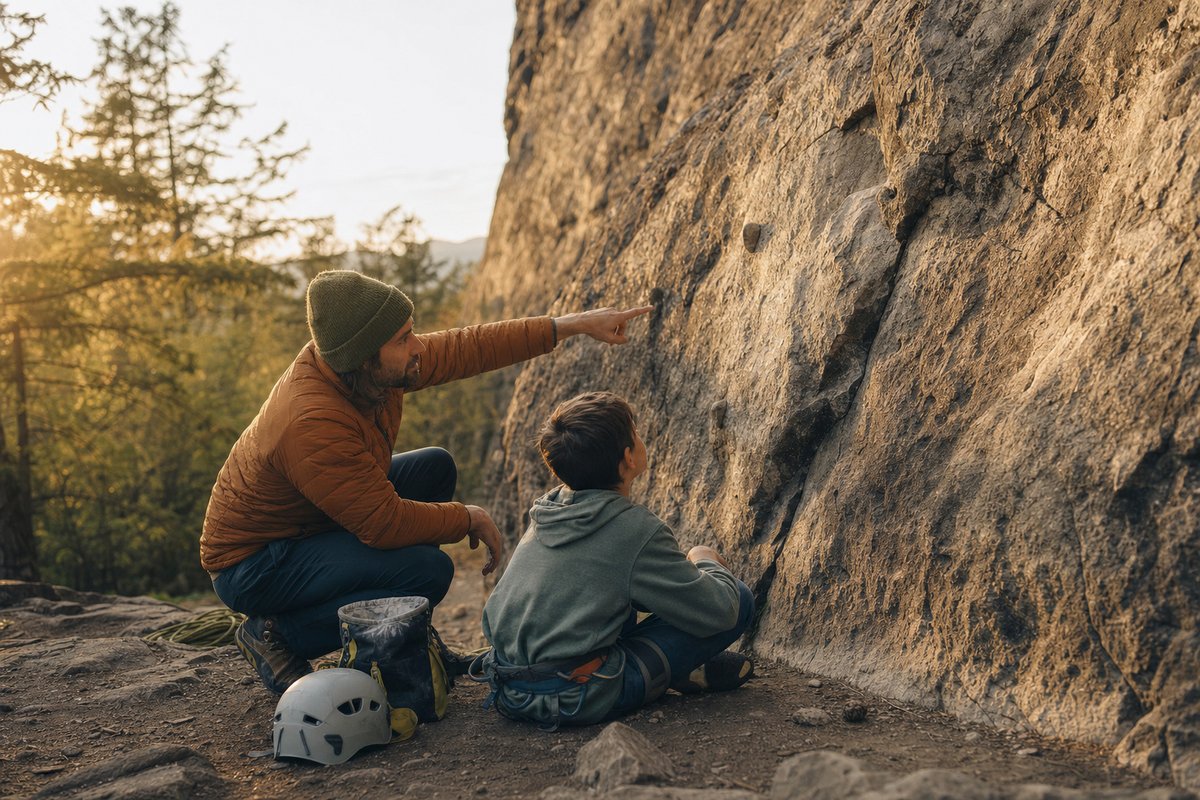
You can stay a climber while you raise one. The hard part is the calendar and the guilt.
Your sessions and theirs can share a building without sharing every goal. Protect a little time that is actually yours, and support theirs without turning the whole week into a shuttle with no wall time for you.
Key takeaways
- One session on the calendar that does not depend on their mood will do more than a vague plan to climb "when things calm down."
- Guilt usually shrinks when the plan is visible. Watching every move is not the only way to care.
- A shared gym works when you each get a turn on the wall and you do not coach each other by default.
- Two households need a traveling bag, a shared calendar, and no loyalty tests at the front desk.
- Shorter sessions count. Forty focused minutes can be a real session.
How do you protect one session that is yours?
Put one session on the calendar before the week fills with their practice. Give it a start time that does not move just because someone had a long day at school.
Stack it next to something you already do. Climb during the last part of their class if the gym allows it. Come early and climb before pickup. Use a lunch hour only if you will still sleep.
If none of those fit, shrink the target. Two sessions a month, written down, beat a hope that the season will get quieter. Trade with another adult when you can. You watch this Thursday. You climb next Thursday. Say what you are trading so nobody is guessing.
A session can be short. Warm up, climb a few things you chose, and leave. You need enough repetition that your shoes stay in use. You do not need a project day.
What do you do with the guilt?
Name the guilt, then look at what your child actually asked for. Many kids want a reliable ride, a snack, and an adult who is glad they climb. They do not need a parent welded to the mat for every easy route.
A parent who still climbs is often easier to talk to about the sport. Kids also notice when you quit and then run their climbing with leftover frustration. A small practice of your own can make you kinder at the edge of their mat.
Say the plan out loud. "You have class until six. I will climb while you are with your coach, and I will watch the last ten minutes if you want." Predictable absence is kinder than hovering with one eye on your own project.
If money or time only covers one membership, say that too. "This season the youth class is what we are paying for. I will climb on a day pass twice a month." A named trade is easier to live with than a silent one. Do not repay your session by coaching them the whole ride home.
How does a shared gym actually work?
A shared gym works when you belong there as an adult climber and they belong there as a kid. Those are related roles. They are not the same hour with the same goals.
Do not recruit them as your belay partner every time you want a rope. Some days they will want that. Some days they are done. Ask another adult, use an auto-belay if the gym offers one, or boulder. Their job is not to staff your session.
Cheer for other kids the way you hope people cheer for yours. Skip coaching someone else's child. Ask before you film. If you climb harder than they do, do not turn their session into a demo. If you are new, say so. Kids relax when an adult is allowed to be a beginner.
On a family visit, give each person a turn to pick the climb, including you. They choose two. You choose one. Nobody grades the other person unless invited. Leave while it is still friendly. "One more try" while they wait by the door sours the hour. Your project can wait for your own session.
What changes when there are two households?
Two households can both support a young climber and still leave room for each adult to climb. The plan has to be visible in both places. A schedule that lives in one parent's head becomes a fight by Friday.
Use one calendar both adults can see. Put practices, rest days, and your own sessions on it. For how to build that week, use the co-parenting climbing schedule guide. Agree on the dates before you debate the philosophy.
Pack a bag that travels. Shoes, a bottle, and any form the gym still needs. Gear at the wrong house cancels more sessions than motivation does. Label it and check it at the door.
Split roles if that keeps the peace. One household may handle team nights. The other may handle weekend open gym. Each adult can climb when the child is at the other house, without keeping score. Do not ask the child to report how the other parent behaved at the gym.
If only one household is near a gym, say what is realistic. A home season and a visit season can both be honest. Identical weeks in unequal houses make everyone tense.
How do you climb together without making them your project?
Climb together on purpose, and keep it shorter than a solo session. The goal is a shared hour, not a transferred ambition.
Let them pick the climb sometimes, even if it is easy for you. You pick sometimes, and choose something where falling looks normal. Ask before you give a hint. "Want a hint?" leaves them in charge.
Separate "our climb" from "their practice" on the calendar. When everything is a family session, they never get a peer group. When everything is their practice, you become staff. One of each, most weeks, is a sturdy shape.
If they ask you to stay off their wall for a while, consider it. Some ages want the gym as their place. You can climb at another time and still be their person in the car.
FAQ
How often do I need to climb to still be a climber?
Often enough that you remember you like it. For many parents that is a short session most weeks, or two honest sessions in a month. The time has to be real, not scraps you resent.
Is it fair to climb during their class?
Yes, if the gym allows it and your child knows the plan. Tell them where you will be and when you will be watching.
What if I feel selfish taking the time?
A short planned session is a small slice of a week you already give to their sport. Spending their practice on your project, while they need a ride and a calm adult, is the version to avoid.
How do we handle gear across two homes?
One labeled bag travels with the child, and both adults know who has it on Sunday night. The weekly layout is in the two-household schedule guide.
My child wants me to belay every time. How do I say no?
Offer a specific yes. "I can belay you for twenty minutes on Saturday. Thursday is my session with another adult." A boundary with a real alternative feels different from a brush-off.
What if I am brand new and they are already on a team?
Start in beginner hours. You do not need to catch their grade to share the sport. Tell them you are learning, and ask them to let you figure out your own feet.
Where do parent-climbers get the next note?
The Belay is the free YouthClimbing.com newsletter for parents. It covers gym visits, gear, safety, and the season, and notes go out as new guides are published. Join The Belay. You can unsubscribe any time.