
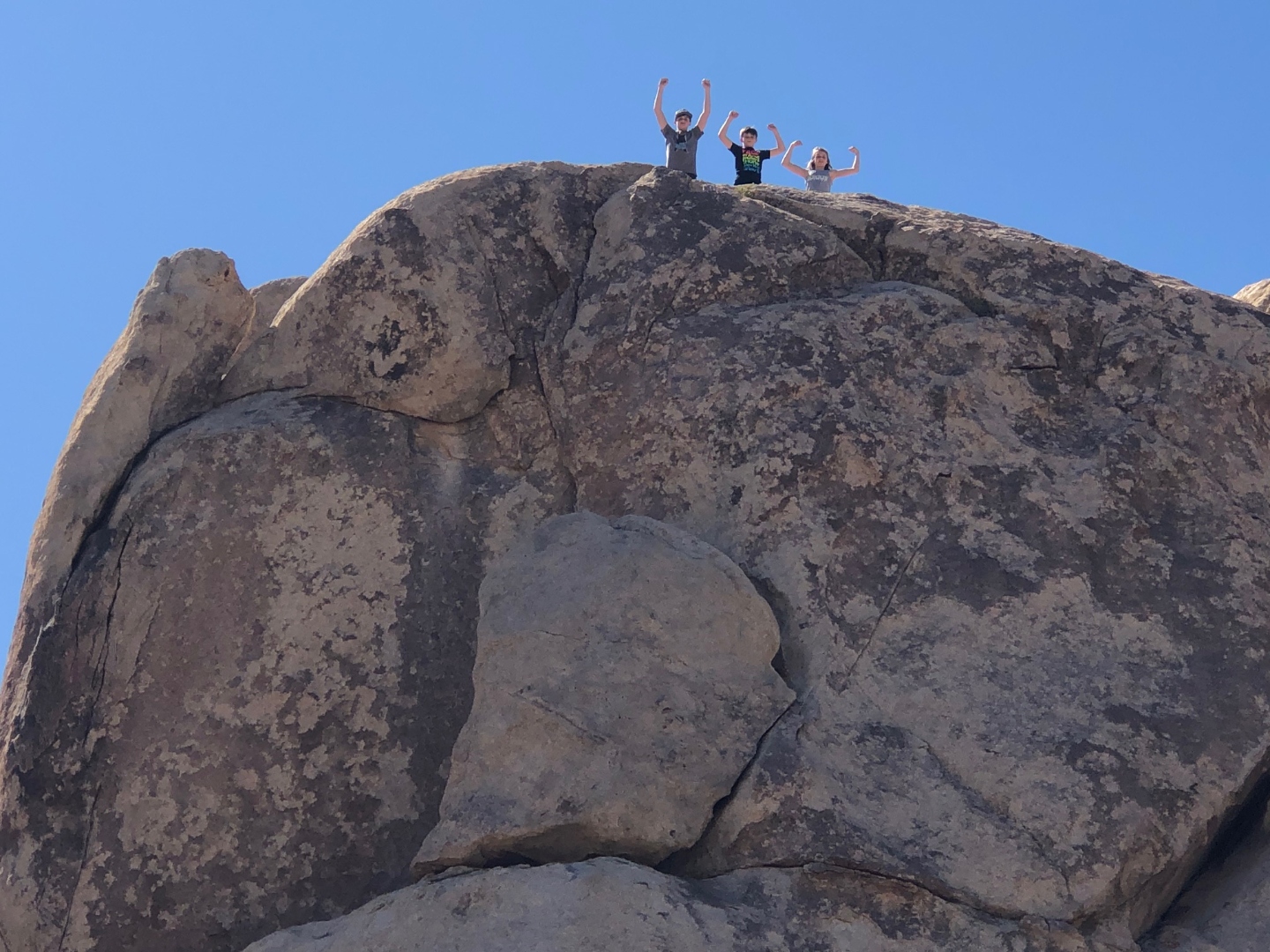
The kid who never climbs at the climbing gym
You pay for the membership. You drive across town twice a week. You pack the chalk bag and the climbing shoes that are somehow already too small again. And when you get there, your kid spends forty minutes on the ninja obstacle course, ten minutes talking to a friend by the cubbies, and maybe eight minutes actually touching the wall.
They are not unhappy. They ask to go back next week. They talk about the gym at dinner, about who was there, about a game they played on the mats during a break. By every measure that matters to a kid, it is a great afternoon. By the measure you are quietly tracking in your head, the one about grades climbed and skills improved, it looks like forty-five minutes of socializing with a thirty-dollar admission fee attached.
If this is familiar, you are not doing anything wrong, and neither is your kid. A climbing gym is one of the only places in a lot of towns where a kid can run around, solve a physical problem, and see the same friends every week without an adult organizing a drill. For some kids, that social and sensory experience is the whole draw, and the climbing itself is almost incidental. The question worth sitting with is not "why won't my kid climb more," but "what is my kid actually getting out of this, and does it matter if it's not climbing."
Key Takeaways
- Loving the gym more than the sport is common and not automatically a problem. Fun and friends are consistently the top reasons kids stay in any activity, climbing included.
- The warning signs to watch for are avoidance and dread, not low ambition. A kid who is happy but unmotivated is different from a kid who is anxious or shutting down.
- You can let a social kid stay social. Pushing grades on a kid who came for the hangout usually backfires and turns the one place they liked into one more place with expectations.
- Coaches and class structure matter more than willpower here. A program built entirely around performance will slowly squeeze out a kid who is there for the community.
- The long view: kids who stay around climbing gyms for the people often end up climbing anyway, just years later than you'd planned, and usually for reasons that are finally their own.
Why this happens more than you'd think
Climbing gyms are built differently than most youth sports environments. There is no bench. There is no single coach narrating every rep. A kid can show up, climb three routes, spend twenty minutes talking to the same two friends they've seen every Tuesday for a year, and nobody flags it as a problem, because structurally there isn't one lane to stay in. That open layout is a feature for the gym's business model and, often, a mismatch for a parent's mental model of what "training" is supposed to look like.
Research on youth sports more broadly backs up what you are watching happen in real time. In Project Play's national survey of youth athletes, 48 percent of current players cited "having fun" and 47 percent cited "playing with friends" as their favorite part of their sport, well ahead of competitive outcomes. The same research found that among kids who've never played organized sports at all, 43 percent said they'd try one mainly to have fun, and only 12 percent of actual participants cared about anything like a scholarship or a roster spot. None of that research is climbing-specific, but it maps cleanly onto a climbing gym: fun and friends are not a consolation prize for a kid who isn't serious. For most kids, they are the actual product.
The flip side matters too. The same survey found kids who do quit sports entirely usually quit by around age 11 to 13, after an average of under three years in an activity, and the single biggest reason parents gave was that their child simply stopped enjoying it. A kid who is still having fun, even if that fun looks like obstacle courses and conversation instead of redpoint attempts, is nowhere near that exit. The kid worth worrying about is the one who stops wanting to go at all.
Is this actually a problem? A short diagnostic
Before deciding whether to intervene, it helps to separate "my kid isn't climbing the way I pictured" from "my kid is struggling." Run through these:
- Do they ask to go, or do you have to talk them into it? A kid who requests the gym trip, even to mostly socialize, is engaged with the place. A kid who needs convincing every single week is telling you something different.
- Do they avoid the wall, or do they just prefer easier, familiar routes? Sticking to the same comfortable boulders is normal and not a red flag. Actively leaving the climbing area whenever it's their turn, or finding reasons to be anywhere else when a coach calls a group over, is more specific and worth paying attention to.
- Does talking about climbing bring energy or shutdown? Watch their face, not just their words, when a coach or teammate brings up trying something harder. Mild "no thanks" is a preference. Visible tension or going quiet can be anxiety wearing a preference's clothing.
- Are they still proud of anything that happens at the gym? Pride about a friendship, a game they won on the mats, or even a joke that landed still counts as pride in the place. A kid with zero pride in anything that happens there, climbing-related or not, is a different situation than a socially happy one.
- Has this always been true, or is it new? A kid who has never been that into climbing itself but loves the gym is a steady pattern. A kid who used to climb eagerly and has recently started avoiding the wall is a change, and changes are usually worth a conversation.
If most of your answers land on the "this is just who they are at the gym" side, you are probably dealing with a kid whose primary motivation is social, not a kid in distress. That's a completely workable starting point, not a failure.
What to do if it really is mostly social
- Let the social part be enough for now. You do not need to convert every gym visit into measurable climbing progress. A kid who shows up consistently for a physical, social activity is getting real value, even if it never turns into a grade chasing hobby.
- Stop narrating their climbing for them. Comments like "you could have tried the overhang" or "you spent the whole time talking" tend to land as criticism of the thing they actually enjoyed, even when you meant it as encouragement toward the thing you enjoy watching.
- Ask what they liked about today, and actually listen to the answer. If the answer is about a friend or a game, that's the real report from the field. Treat it as useful information about what's working, not a dodge of the question you wanted answered.
- Look at the class or program structure, not just your kid. A beginner or rec class with games, partner challenges, and loosely structured free climb time will usually hold a social kid's interest far longer than a performance-focused team track that expects steady grade progression from day one.
- Protect unstructured time at the gym on purpose. If every single visit is a structured class with no open climbing or hangout time attached, a social kid has nowhere to get the part they actually came for. A little built-in slack is not wasted time.
- Revisit the question every few months, not every week. Motivation in kids shifts with age, friend groups, and what else is going on in their lives. A kid who is purely social at nine might get genuinely competitive at twelve, often right around when a friend group starts caring more about the wall.
What to do if the signs point toward something harder
If your diagnostic above turned up avoidance, dread, or a recent sharp change rather than a steady long-term preference, a few different moves are worth trying before assuming it is simple disinterest.
- Separate the gym from the specific class. A kid who dreads "Tuesday team practice" but still asks to go on a casual weekend visit is telling you the problem is the structure, not the sport or the building.
- Talk to the coach directly, without your kid in the room. Coaches see patterns across dozens of kids and can usually tell you whether what you're seeing is typical for that age or a shift worth watching.
- Ask about comparison, not just pressure. Project Play's research found kids who eventually quit sports were notably more likely to report being compared to other athletes than kids who stayed, more than being directly pressured to perform. A kid quietly measuring themselves against a faster-progressing friend can look like disinterest from the outside.
- Rule out something physical. A kid who has quietly stopped liking a sport they used to enjoy is sometimes dealing with a nagging injury, a growth-related ache, or simple fatigue they don't have the words to explain. A quick, low-pressure check-in about how their body feels can surface something a mood conversation won't.
- Offer an exit ramp without framing it as failure. Sometimes the honest answer is that this particular gym, class, or sport isn't the right fit anymore, and that's a legitimate outcome, not a problem to be solved by trying harder.
The big picture
A climbing gym does not need to produce a climber to be worth the membership. For plenty of kids, it is doing something quieter and arguably more valuable: giving them a consistent place to move their body, see familiar faces, and feel like they belong somewhere outside of school. That's not a lesser version of what a climbing gym is for. It's one of the actual things it's for.
If your kid is the one spending most of a session on the mats and most of the drive home talking about a friend instead of a route, you are not failing to raise a climber. You are watching a kid use a climbing gym exactly the way a lot of kids do, for connection first and skill second, in whatever order their own interest eventually sorts itself out. Some of those kids climb seriously a few years later, once the social draw has quietly built the comfort and belonging that makes trying harder feel safe instead of exposed. Some never do, and spend a happy decade treating the gym as a second living room with better foot holds. Both are fine outcomes for a kid to land on, and neither one needs your intervention to get there.
Frequently Asked Questions
Is it bad if my kid doesn't actually like climbing?
No. Plenty of kids are drawn to the gym for the friends, the movement, and the open layout rather than the sport itself. As long as they're engaged and not avoiding the place, that's a legitimate way to use a climbing gym, not a problem to fix.
How do I know if my kid is just socializing or truly avoiding the wall?
Watch for the difference between preference and avoidance. Sticking to easy, familiar routes while chatting with friends is preference. Leaving the area whenever it's their turn, or visibly tensing up when harder climbing comes up, points toward avoidance worth a closer look.
Should I push my kid to try harder routes if they're happy just hanging out?
Generally no. Pushing a kid who came mainly for the social side tends to attach pressure to the one place they liked without it, which can make them want to go less, not climb more.
Could this be burnout instead of a social preference?
It can be, especially if the pattern is new rather than long-standing. A kid who used to climb eagerly and has recently started avoiding the wall is showing a change, and changes are worth a quiet conversation rather than an assumption either way.
Will a kid who mostly socializes ever get better at climbing?
Sometimes, often later than a parent expects. The comfort and belonging built through years of social gym time can make a kid feel safe enough to try harder climbing on their own schedule, once the interest shifts from the inside rather than from outside pressure.
When should I worry enough to change gyms or programs?
If a kid dreads a specific class but is fine with casual visits, the issue is usually the class structure, not the sport. Talking to the coach and checking whether the class fits their personality is a reasonable first step before changing gyms altogether.