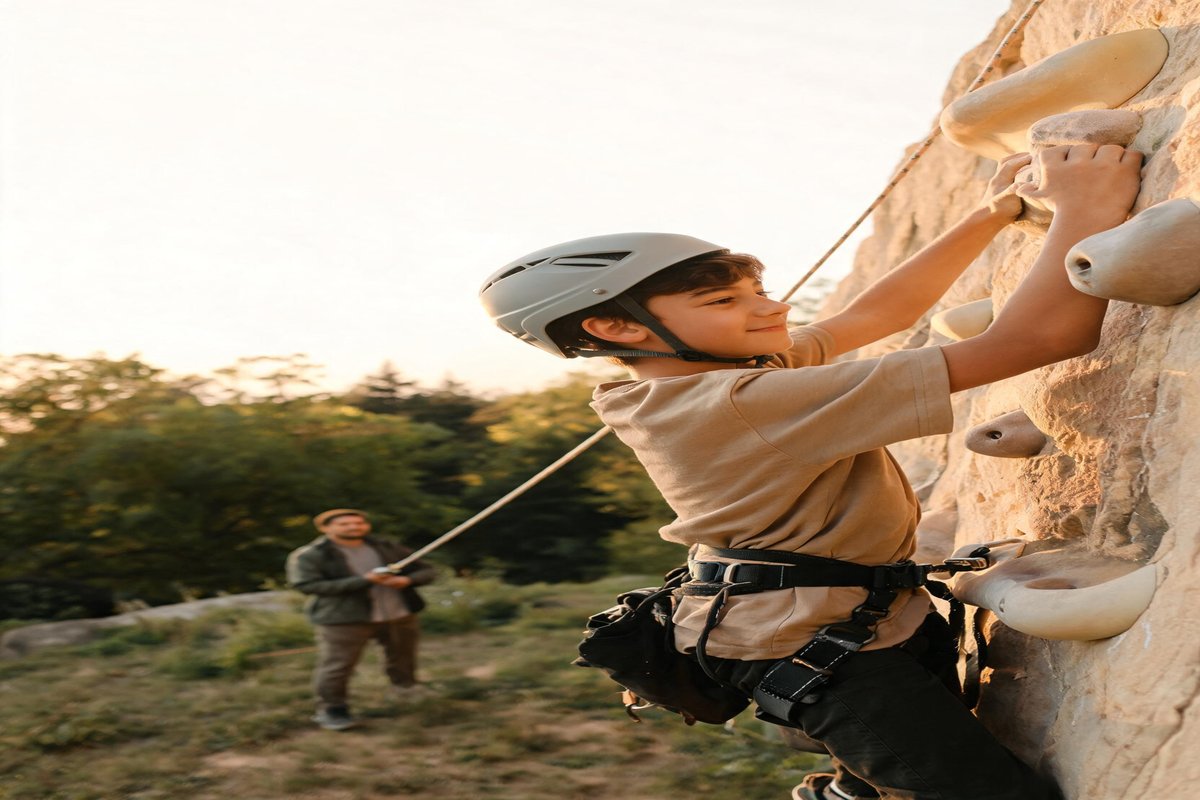
A first outdoor day with a child should be a short, easy trip you could repeat next month. Pack helmets and a harness that fits today, and decide the turnaround time before you leave the house.
This checklist covers gear and readiness. It does not teach you to lead, to build an anchor, or to rappel. If any part of that system is new to you, go with a guide or a mentor who already climbs outside with kids. Gym top-rope time does not transfer into outdoor anchors by itself. For how the day feels once you are out there, read outdoor climbing with kids. For choosing an area, start with the destinations guide and then confirm local rules.
Key takeaways
- Pick a short approach and an easy objective. Save hard routes for an adults-only day.
- An experienced adult runs the rope system. A first outdoor day is a bad time to debut a new belay device or a new leader.
- Helmets go on before anyone stands under the cliff. The harness has to fit this month.
- Say the turnaround time out loud. The walk out is part of the climbing.
- The top is optional. Ending while your child still wants to return is the successful send.
What should you settle before you pick a crag?
Settle the people and the goal first. Who will belay, and have they belayed this child recently? Who is qualified to choose the route and manage the anchor? If the honest answer is "we will figure it out at the cliff," book a guide or postpone.
Choose a single-pitch day with a short approach a child can actually walk, with energy left for the walk out. Popular enough that you are not alone is a plus. A project at your limit is a different trip. So is a long hike that sounds lovely on a website and miserable in hour three with a tired kid.
Check the season, the heat, and storms. If the forecast is ugly, pick another day. Afternoon weather that builds is a reason to be done early, not a reason to race the sky. Read the land rules for permits, parking, closures, and whether dogs or drones are even relevant. Cell maps lie. The destinations guide helps you find candidate areas. The land manager's current notice is the rule that counts.
Tell someone who is staying home where you are going and when you expect to be back. That one call is part of the checklist.
Who needs to be ready, and for what?
Your child should already know the words you use in the gym. Climbing, take, slack or clip as you use them, and ready to lower. They should have practiced being lowered until it is boring. An outdoor lower feels more serious because the ground is real. Do that practice on gym mats first, not on trip morning.
An adult who already belays this child well should belay. A child who is learning to belay can keep learning in the gym. Stacking a first outdoor day and a first outdoor belay is two new jobs. One new job is enough.
You, the parent, need a job even if you are not on the rope. Watch the pack, watch the younger sibling, and keep helmets on. If you will stand under the wall, you wear a helmet too.
Agree on the story of the day in one sentence your child can repeat. We walk in, we try a short climb, we eat, we leave while everyone is still glad. Reaching the top can be part of the story. It cannot be the price of the ride home.
What goes in the pack?
Lay the gear out the day before and touch each item. Morning-of hunting is how shoes and meds get left in the hall.
- A helmet for each person, including adults who will be under the cliff. Chin strap snug enough that the helmet stays put when they nod.
- A harness that fits this child today. The waist belt sits above the hip bones and stays there when you tug down. Leg loops are snug. A too-big adult harness is unsafe because a child can slip. If you are unsure, get the fit checked at a shop or by your guide before trip day. Many younger children belong in a full-body harness. Buckles double-checked.
- A rope in good condition, long enough for the route you actually intend, in the hands of someone who knows how to judge sheath, core, and history. If nobody in the group can do that, use the guide's rope.
- The belay device and locking carabiners that belayer already uses well. No new gadget on the way to the crag. Whatever slings or anchor pieces that person already knows how to use, and nothing they saw in a video last night.
- Climbing shoes only if this rock needs them and they fit now. Approach shoes they can walk in. Socks. A small blister kit.
- Sun shirt, hat for the approach, and a layer warmer than you think the afternoon will be. A rain shell in the pack on a clear morning.
- More water and food than the adult plan requires, including something salty. A treat you are willing to hand over on the hike out.
- Personal medications, a small first-aid kit, and any inhaler or allergy item you would want without a pharmacy nearby.
- A headlamp if the day could run late. A paper or downloaded map because the signal may die. A trash bag. You pack out tape, peels, and wrappers.
- Permits or a parking pass if the area requires them.
Leave room in the adult pack for the child's extra layer. Their pack should be light enough that the walk stays kind.
The car gets its own kit. Extra water, a full change of clothes, a towel, and snacks for the ride home. Wet shoes do not need to share the back seat with the only hoodie.
What do you check the day before?
Check the forecast again. Check the approach in daylight photos if you have never walked it, and be honest about distance. A "ten-minute" approach on an adult forum can be thirty with a five-year-old.
Fit the harness at home. Adjust the helmet. Have your child put both on and take both off so the straps are familiar. Tie a pair of shoes they have already worn. Brand-new shoes that eat a heel are a poor surprise on mile one.
Set an early bedtime. Charge a phone and download the offline map. Put the turnaround time on a note you will see in the morning. If storms, a closure, or a sick kid shows up, the checklist includes permission to cancel. A cancelled first trip is cheaper than a miserable one.
Name the bathroom plan. Some crags have a vault toilet. Some have trees and a privacy plan you should explain ahead of time, including a bag for waste if that is the local rule. Surprises about bathrooms ruin more family days than hard routes do.
What do you check at the cliff?
Helmets on before anyone stands in the fall line. Look up for other parties and for loose rock. Put packs somewhere a falling stone and a falling climber will not meet them. Kids do not throw rocks. Adults do not trundle for fun.
One child climbs at a time unless you have qualified people and a system for more. The belayer's attention is the whole safety plan. Conversation can wait.
Start on terrain easier than gym climbs of the same grade. Rock is less even, and the air feels bigger. Cheer the effort and the decision to come down. Sitting in the harness and being lowered on purpose is a complete outdoor lesson.
Watch the clock you set in the morning. Leave a margin for a slow walk out, a snack, and a mood that can still survive the car. Heat, wind, or a building cloud moves that clock earlier. You do not negotiate with a storm to finish a pitch.
If your child refuses, the hike can still count. Do not push a scared child up a first outdoor route. Low boulders look friendly and often are not. Uneven landings and a first trip are a rough mix. If you are not already confident managing a fall on that ground, skip the boulder and keep the day to a guided or mentored top-rope, or to a picnic with a view of the cliff. The outdoor climbing tips cover more of this family pace once the system is in qualified hands.
What should wait for a later trip?
Wait on lead climbing for the child, rappelling as the feature of the day, long multipitch routes, and any cliff that requires the group to move fast. Wait on a new belay device, an unworn pair of shoes, and a limit project that matters to the adult.
Also wait on campusing, hangboard talk, and training homework at the crag. The first outdoor day is about trust in the system and a wish to come back. Grades can show up on trip three.
If the day goes well, write down what you would repeat and what you would drop. That note is the start of the next checklist. If the day goes poorly because someone was scared or tired, you still learned the right length of approach. Use the destinations guide to pick a kinder option next time, or go back to the same easy cliff and do less.
FAQ
Can we go if we only climb in the gym?
Yes, if a qualified outdoor belayer or a guide owns the system, and your child has already practiced being lowered. Gym top-rope does not teach you to build an outdoor anchor. That gap is a reason to hire help, not a reason to improvise.
Does my child need their own rope?
No. They need a helmet and a harness that fit, plus a rope in good shape managed by someone who knows that system. Sharing the group rope is normal.
What if they refuse to climb when we get there?
Treat the walk and the snack as the day. A forced first route teaches them that the crag is a test. Ask if they want to watch, touch the rock, or head back. Any of those can be the right call.
How early should we start?
Early enough to walk in while it is cooler and to leave on your turnaround time. The sunrise matters less than the hour you promised to start home.
What belongs in the car instead of on the harness?
Extra water, dry clothes, a towel, and the ride-home snacks. The crag pack stays light enough that an adult can carry the rope and still have a hand free on the trail.
Do we need a permit?
Often, depending on the land. Check before you drive. The destinations page is a starting map. Closures and permit rules from the land manager override a blog, a forum, and last year's trip report.
The Belay is the free YouthClimbing.com newsletter for parents. Notes on outdoor days, kids' gear, safety, and the youth season go out as new guides are published. Join The Belay. You can unsubscribe any time.